

Business
Billionaire Jeff Greene Sells Palm Beach’s Tideline Resort for $150 Million

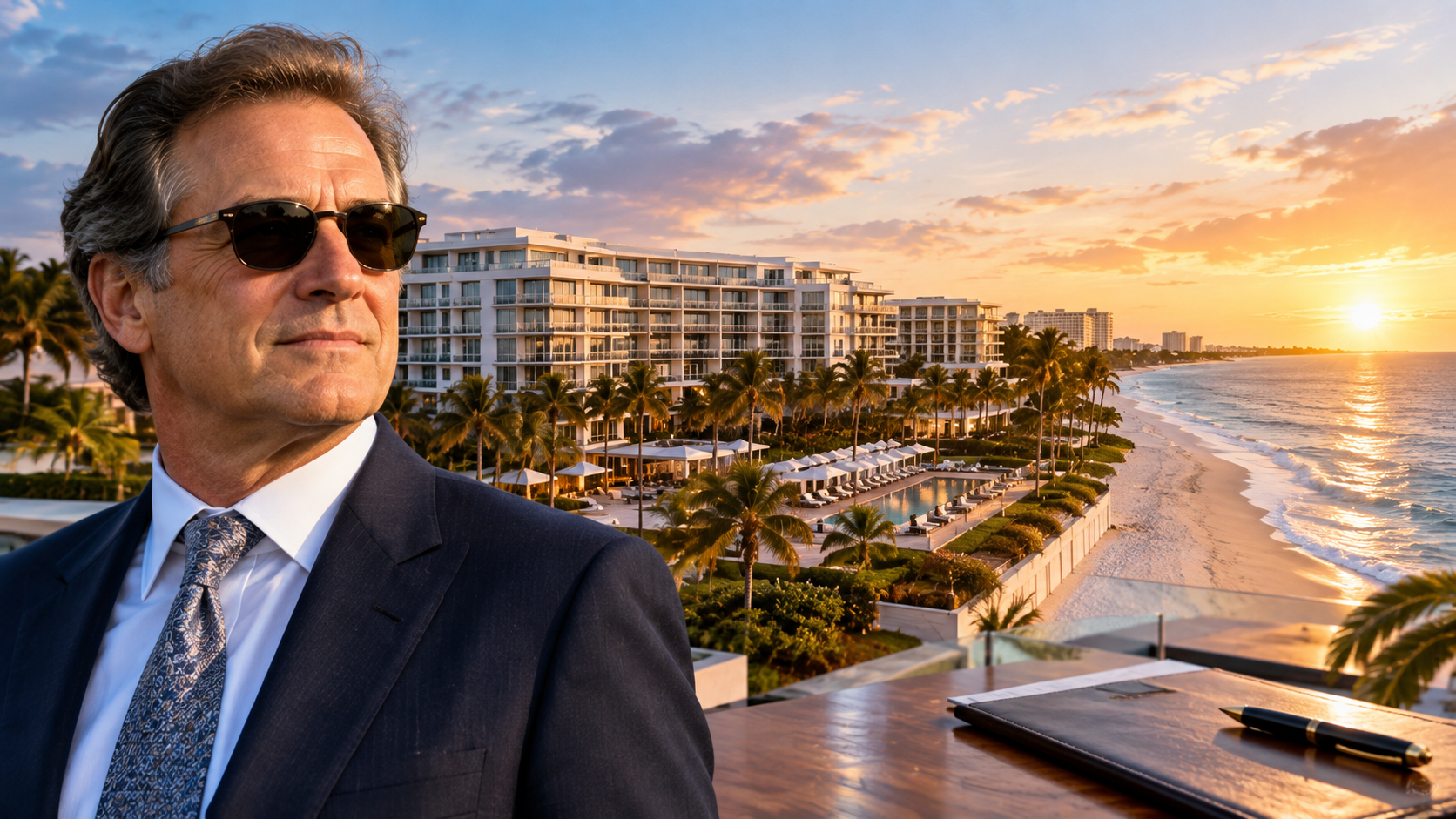
Billionaire Jeff Greene Sells Palm Beach’s Tideline Resort for $150 Million in a Textbook Capital-Recycling Play
Billionaire real estate investor Jeff Greene has sold the oceanfront Tideline Palm Beach Ocean Resort and Spa to an affiliate of Fort Partners, the hospitality development firm led by Nadim Ashi, for roughly $150 million — a transaction that on the surface reads as a straightforward luxury hotel sale, but underneath is a case study in how sophisticated private investors extract value from trophy real estate over a multi-decade hold. Greene acquired the property, then known as The Omphoy, for $41 million in 2011. Fifteen years, a $20 million renovation and a rebrand later, the sale price represents roughly a 266 percent gain in value — a return few asset classes outside of concentrated equity positions can match, and one that underscores why patient capital continues to gravitate toward irreplaceable coastal real estate in supply-constrained markets like Palm Beach.
The mechanics of the deal are instructive for anyone underwriting similar assets. The 134-room, five-story hotel sits on three acres at 2842 South Ocean Boulevard, spanning roughly 100,000 square feet, which puts the transaction at approximately $1.2 million per room and $1,500 per square foot — pricing that sits firmly in ultra-luxury hospitality territory and reflects not just the physical asset but its irreplaceable oceanfront location in one of the most tightly held residential and resort markets in the United States. Notably, the sale was structured to include not only the real estate but the tangible and intangible personal property that comes with an operating luxury resort — branding, fixtures, furniture — and the property was marketed unencumbered by existing brand and management contracts, giving Fort Partners maximum flexibility to reposition the asset under its own operating platform rather than inheriting a legacy management agreement.
Greene’s decision to sell also illustrates a broader pattern among ultra-wealthy individual owners of trophy hospitality assets: the renovation-then-exit strategy. Rather than holding indefinitely, Greene invested $20 million to modernize the resort — adding a private beach, a 6,000-square-foot spa and private event facilities — completed the work, and then engaged Eastdil Secured Savills roughly a year later to test the market. That sequencing, capital improvement followed by a professionally advised sale process, is the same playbook institutional owners use, just executed by an individual billionaire with full discretion over timing and structure rather than a fund bound by an investment committee’s exit mandate.
The buyer side of the transaction is equally telling. Fort Partners, led by Nadim Ashi, has built a track record as one of South Florida’s most active hospitality developers, and the acquisition of an unencumbered, newly renovated oceanfront asset in Palm Beach gives the firm a platform to either reposition Tideline under one of its existing luxury brand relationships or hold it as an independent trophy asset — a decision that will itself be closely watched by the broader South Florida hospitality market as a signal of where brand affiliation adds the most value in the state’s tightest coastal submarkets.
For investors thinking about capital allocation in luxury hospitality, the Tideline sale offers a clean read on where value has concentrated over the past decade and a half: not in scale, but in scarcity. Palm Beach has added essentially no new oceanfront hotel inventory in a generation, and an asset like Tideline — irreplaceable land, direct beach frontage, proximity to one of the wealthiest residential enclaves in the country — behaves less like a hospitality operating business and more like a scarce real asset that happens to generate hotel revenue. The risk in over-reading this transaction is assuming it is replicable at scale; it is not. Assets like Tideline are, by definition, singular. But the return profile is a reminder of why the world’s wealthiest individual investors continue to hold a disproportionate share of their real estate exposure in exactly this kind of irreplaceable coastal trophy asset.


The most attractive real estate business models in 2026 continue to be shaped by the same three forces that reordered the industry after 2023: automation, capital scarcity in emerging markets, and a widening gap between prime and secondary product. For elite and high-net-worth investors, the opportunity set has narrowed slightly compared to 2025 — several crowdfunding platforms have faced tighter regulatory scrutiny, while logistics and luxury development have consolidated their position as the two clearest outperformers. Below is an updated read on where sophisticated capital is actually going.
1. Property Management Franchises
Property management franchises remain a low-volatility way to hold real estate exposure without direct operating risk, and the model has held up well through 2026’s higher-for-longer rate environment in the US. Franchise networks such as Real Property Management and Property Management Inc. continue to expand in metropolitan markets with structurally tight rental supply, offering investors predictable fee-based income tied to assets under management rather than to price appreciation — a distinction that has become more valuable as US home-price growth has essentially flattened this year, with the national median home value sitting near $360,000 and just 0.2 percent year-over-year growth. For elite investors, the appeal has not changed: a proven operating system, ongoing franchisor support, and a revenue base that holds up even when transaction volumes slow, since rental demand and property-management fees are far less cyclical than sales commissions.
2. Digital Investment Platforms (Real Estate Crowdfunding)
Real estate crowdfunding in Latin America has matured considerably since 2025, though not without turbulence. In Mexico, Briq.mx has continued operating under the country’s Fintech Law, but its own leadership has been vocal in 2026 about a structural disadvantage: unlike banks and regulated savings institutions, crowdfunding platforms do not benefit from the same tax incentives, which their executives argue discourages broader retail participation even though regulatory supervision itself is strict. 100 Ladrillos, based in Guadalajara, has continued to grow its footprint — now employing more than 100 people — and has increasingly positioned itself around nearshoring-driven industrial and logistics assets rather than purely residential product, a pivot that mirrors where institutional capital has also been moving. In Argentina, the sector has diversified beyond the original crowdfunding pioneers toward platforms like Bricksave, which reported financing 323 properties for its investor base in the first quarter of 2026 alone, with 269 units currently under management across six US cities — reflecting a broader trend of Argentine investors using crowdfunding platforms to access dollarized US residential assets rather than only local Argentine projects, a hedge against peso volatility that has become increasingly common among the country’s savers. The regulatory environment is also tightening: Argentina’s securities regulator, the CNV, has stepped up its scrutiny of real estate crowdfunding structures, a trend elite investors should watch closely given how the category is classified will determine investor protections going forward.
3. Development of Luxury and Premium Properties
Luxury development remains one of the clearest wealth-preservation plays available to elite investors, and Puerto Madero continues to anchor that thesis in Argentina. The neighborhood closed 2025 as the most expensive in Buenos Aires, with average values around US$6,144 per square meter — a premium that has held despite Argentina’s broader macroeconomic volatility, precisely because Puerto Madero functions less as a conventional residential market and more as a dollarized store of value for Argentine capital seeking safety within the country’s own borders. That said, the investment case has grown more nuanced this year: independent market analysis increasingly flags that Puerto Madero’s rental yields remain low relative to its purchase prices, and that the neighborhood’s appeal is now concentrated almost entirely among Argentine buyers seeking capital preservation rather than international investors chasing yield, a distinction elite allocators should weigh carefully before assuming Puerto Madero behaves like a global luxury market such as Manhattan. In the US, the luxury development pipeline led by firms like Related Companies, SL Green Realty and Extell Development continues to benefit from persistent scarcity of premium inventory in gateway cities, though 2026 has brought a more selective buyer, with elevated financing costs continuing to separate well-capitalized developers from those reliant on leverage.
4. Technological Solutions for Real Estate (PropTech)
PropTech platforms have scaled meaningfully since 2025. Zillow now draws well over 200 million monthly visitors — more than five times the figure commonly cited just a year ago — and has continued expanding its AI-driven agent tools and a broadened listing partnership with Realtor.com launched in May 2026, even as the company has faced regulatory friction this year, including an antitrust suit alongside Redfin over alleged rental-market competition suppression, and a brief, court-reversed loss of access to Chicago-area listings. For sellers looking to cut commission costs, flat-fee platforms like Houzeo have become considerably more relevant in 2026: with the average US agent commission now running around 5.7 percent of sale price according to a 2026 industry survey — notably higher than immediately after the 2024 NAR settlement that was supposed to compress commissions — a seller listing a roughly $418,000 home through a traditional agent pays close to $23,800 at closing, compared to roughly $2,300 through a flat-fee platform like Houzeo. For elite investors managing larger residential or small multifamily portfolios, this commission gap is increasingly material to net returns, particularly on more liquid, frequently-traded assets.
5. Investments in Industrial and Logistic Properties
Industrial and logistics real estate remains the standout performer in the Argentine market heading into 2026. According to ARLOG’s annual industry survey of more than 500 logistics professionals, 83 percent of logistics companies plan to invest in 2026, with 79 percent of that capital directed toward warehouse technology, robotics, automation and security systems, and 70 percent planning to expand physical warehouse capacity outright. Premium industrial vacancy in the Buenos Aires metropolitan area has stayed tight, sitting near 8.96 percent as of mid-2026, supporting continued rent growth in the sector’s best-located assets. The broader macro backdrop reinforces the thesis: Argentina’s RIGI investment incentive regime has already attracted more than US$150 billion in announced, evaluated or approved long-term infrastructure projects, concentrated in provinces including Neuquén, Río Negro, San Juan, Jujuy, Salta and Mendoza, a wave of capital that is expected to generate meaningful downstream demand for logistics and industrial real estate as these regions develop into genuine industrial poles over the coming years. For elite investors, industrial and logistics assets continue to offer the combination that luxury residential often cannot: genuine yield, tied to structural demand drivers like nearshoring and infrastructure investment, rather than purely capital-preservation logic.
6. Sustainable Real Estate and Smart Homes
Sustainability and smart-home integration have moved from differentiator to baseline expectation in premium developments throughout 2026, particularly as ESG-oriented institutional capital increasingly treats green-building certification as a genuine underwriting criterion rather than a marketing feature. Keyless entry, integrated energy management and building-wide automation continue to expand across the premium residential and short-term rental segments, following the model pioneered by operators like Casai, and developers are increasingly bundling these features into new luxury construction from the outset rather than retrofitting them. The elite continues to place a premium on these attributes not purely for environmental reasons but because they measurably reduce operating costs and improve asset liquidity at resale — a dynamic that has become more pronounced as buyers in mature luxury markets increasingly factor sustainability credentials into valuation.
Critical Reflection
The risks flagged in 2025 remain just as relevant heading into 2026, and in some cases have sharpened. Real estate crowdfunding continues to face genuine regulatory uncertainty across Latin America — Mexico’s tax-treatment disadvantage and Argentina’s tightening CNV scrutiny both suggest the sector’s rules are still being written, which should temper allocation size for elite investors until the regulatory picture stabilizes. Luxury markets like Puerto Madero remain vulnerable to the gap between headline pricing and actual liquidity — high average values do not guarantee the ability to exit a position quickly, and yields in these markets remain structurally low compared to income-generating alternatives. PropTech adoption, while accelerating, continues to face legal and structural friction, as this year’s antitrust litigation against Zillow and Redfin illustrates — platform dominance itself is now drawing regulatory attention in ways that could reshape how commissions and listing access work industry-wide. The clearest through-line from 2025 to 2026 is that industrial and logistics real estate, backed by measurable demand drivers like nearshoring and infrastructure spending, continues to offer a more defensible risk-adjusted case than pure capital-preservation plays in luxury residential — a distinction elite investors should weigh more heavily than headline prestige when allocating fresh capital this year.
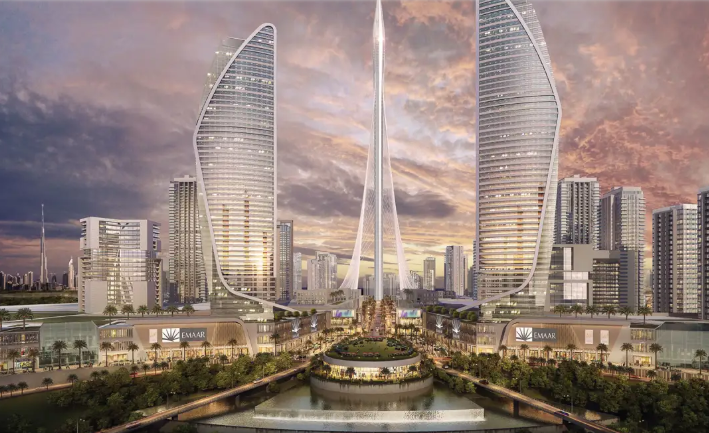
Investing in the World’s Tallest Buildings: The 2026 Playbook for Supertall Real Estate
Real estate tied to the world’s tallest buildings continues to sit in a category of its own. These towers are not simply large buildings — they are engineered scarcity, occupying irreplaceable positions in global financial hubs, commanding tenant and buyer premiums that ordinary Grade-A stock cannot match, and generating income from far more than rent alone. As of September 2026, the five tallest completed buildings on Earth, ranked by the Council on Tall Buildings and Urban Habitat, are Burj Khalifa in Dubai, Merdeka 118 in Kuala Lumpur, Shanghai Tower, the Makkah Royal Clock Tower in Saudi Arabia, and the Ping An Finance Centre in Shenzhen. Together they offer a useful cross-section of how supertall real estate actually performs as an investment class — and where the risks sit.
Burj Khalifa, Dubai, UAE — 828 meters, 163 floors
Burj Khalifa has held the title of world’s tallest building since 2010 and, at 828 meters, still leads its nearest rival by close to 150 meters — a margin that has remained essentially unchallenged for fifteen years. Developed by Emaar Properties, the tower is a mixed-use asset combining luxury residences, corporate offices, the Armani Hotel and extensive retail, with residential units historically transacting at premium pricing in Dubai’s ultra-prime segment. The investment case rests less on any single income line than on the combination: residential sales and rentals, office leasing, hotel operations, and one of the highest-grossing observation decks in the world, all under one address whose brand value alone commands a premium over otherwise comparable Downtown Dubai product. Emaar itself remains one of the most closely watched developers globally — the company’s chairman confirmed this year that Dubai hotel occupancy has recovered to around 60 percent after dipping sharply during regional conflict, and Emaar is preparing a roughly $55 billion urban development for once conditions stabilize further, underscoring the scale of capital still committed to the emirate’s built environment.
Merdeka 118, Kuala Lumpur, Malaysia — 678.9 meters, 118 floors
Completed in 2023 and developed by state-linked investment fund Permodalan Nasional Berhad, Merdeka 118 is the world’s second-tallest building and the tallest in Southeast Asia. The tower combines offices, a Park Hyatt hotel, retail and residential space in Kuala Lumpur’s financial district, and its sustainability credentials — energy-efficient systems designed to meet international green-building standards — have made it a reference point for ESG-oriented institutional capital looking at Southeast Asian office exposure. For multinational tenants seeking a single prestige address in Kuala Lumpur, Merdeka 118 functions similarly to how Petronas Towers did a generation earlier: an anchor asset whose scarcity value supports premium rents even as broader Kuala Lumpur office stock faces more competitive, oversupplied conditions.
Shanghai Tower, Shanghai, China — 632 meters, 128 floors
Shanghai Tower, the world’s tallest twisting skyscraper, anchors Shanghai’s Lujiazui financial district alongside the Shanghai World Financial Center and Jin Mao Tower, forming one of the most concentrated clusters of supertall office space anywhere on Earth. Owned and operated by Shanghai Tower Construction & Development, the building combines Grade-A offices, a Jin Jiang-operated luxury hotel, retail and one of the world’s highest observation decks. Its investment profile is distinct from the Gulf and Southeast Asian towers on this list in one important respect: as a state-linked asset in a market where foreign direct ownership of trophy office towers is tightly controlled, exposure for international investors typically comes indirectly, through listed developers, REIT-like vehicles, or joint-venture leasing arrangements with multinational tenants, rather than through direct equity ownership of the tower itself.
Makkah Royal Clock Tower, Mecca, Saudi Arabia — 601 meters, 120 floors
The Makkah Royal Clock Tower is the tallest hotel building in the world and the anchor of the Abraj Al-Bait complex overlooking the Masjid al-Haram, the holiest site in Islam. Its investment profile is unlike any other building on this list: demand is driven not by corporate tenancy or luxury residential appeal but by religious pilgrimage, with the Hajj and Umrah seasons generating extraordinarily high and highly predictable occupancy for the Fairmont-operated hotel component. Saudi Arabia’s broader push to expand religious tourism capacity — alongside the kingdom’s parallel real estate opening measures, including its newly operational foreign property ownership framework and the Public Investment Fund’s coastal development pipeline — makes Mecca’s hospitality-anchored supertall real estate one of the more insulated income profiles in this category, largely uncorrelated with the global office and luxury residential cycles that drive the other towers on this list.
Ping An Finance Centre, Shenzhen, China — 599.1 meters, 115 floors
Built as the headquarters for Ping An Insurance, China’s second-largest insurer, the Ping An Finance Centre anchors Shenzhen’s Futian central business district and is directly integrated with the city’s metro network and the Guangzhou–Shenzhen–Hong Kong high-speed rail link — a degree of transit integration that is itself a meaningful driver of long-term tenant demand in a city that has grown to nearly 13 million people since its designation as a Special Economic Zone. More than 100 floors of office space, occupied principally by Ping An and its financial-services subsidiaries, sit above a retail podium and conference facilities, with a public observation deck and private club occupying the pyramidal crown. As with Shanghai Tower, direct foreign equity access is limited; the more realistic route for outside investors is indirect, through listed Chinese financial and property vehicles or leasing relationships, rather than acquiring a stake in the tower itself.
Why Supertall Real Estate Behaves Differently From Ordinary Prime Assets
Several structural features distinguish these buildings from conventional trophy office or residential towers, and they explain why supertall assets have historically commanded a premium even through real estate downturns. First is brand value: a Burj Khalifa or Merdeka 118 address functions as a marketing asset in its own right for corporate tenants and luxury buyers, which supports occupancy and pricing power independent of local market softness. Second is revenue diversification — nearly every building on this list blends office, hospitality, residential and tourism income streams under a single roof, which cushions the asset against a downturn in any single sector in a way a pure-play office tower cannot replicate. Third, and increasingly relevant to ESG-focused institutional capital, is sustainability positioning: newer entrants to the supertall category, Merdeka 118 chief among them, have been designed from the outset to meet international green-building certification standards, a factor that is becoming a genuine underwriting criterion rather than a marketing footnote for large allocators.
The Access Problem — and Where Tokenization Genuinely Fits
The single biggest constraint on investing in this category is access. These are, almost without exception, either sovereign-linked, state-owned or closely held corporate assets, meaning direct equity ownership is simply not available to most investors, institutional or individual. That access gap is precisely why real estate tokenization has drawn serious institutional attention over the past two years — not as a retail gimmick, but as a genuine mechanism for fractionalizing ownership of otherwise inaccessible trophy assets. Dubai’s Land Department, working with the Virtual Assets Regulatory Authority and the Central Bank of the UAE, has already launched a pilot phase of blockchain-based real estate tokenization specifically framed around expanding fractional ownership and international participation in the emirate’s property market. Academic and regulatory frameworks published this year have likewise moved tokenization from experimental blockchain use case toward regulated market infrastructure, emphasizing that the technology is best understood as augmenting existing ownership and regulatory structures rather than replacing them.
For investors specifically interested in supertall and trophy real estate, the realistic paths to exposure today remain listed developer equity — Emaar Properties for Dubai exposure, PNB-linked vehicles for Merdeka 118, listed Chinese property and insurance names for Shanghai Tower and Ping An Finance Centre — alongside REITs holding comparable trophy assets, and a still-nascent but regulator-backed tokenization market that is worth monitoring closely rather than entering on the basis of any single platform’s marketing claims. As with any emerging asset-access mechanism, the platforms offering fractional or tokenized exposure vary enormously in regulatory standing, custody arrangements and transparency, and warrant the same due diligence an investor would apply to any unlisted vehicle — verified regulatory registration, clear custody of the underlying asset, and an audited link between the token and actual title or economic rights, rather than marketing promises of low minimums and instant liquidity.
The Bottom Line
Supertall buildings remain among the most resilient trophy assets in global real estate precisely because so little new competing supply can realistically be built — each of the towers above required years of specialized engineering, extraordinary capital outlay and, in several cases, direct government or sovereign backing to complete. That scarcity is the entire investment thesis. The risk for investors is less about the buildings themselves and more about the access route chosen to reach them: direct ownership is largely closed, indirect listed exposure carries the operating and governance risk of the parent developer or state entity, and the tokenization route, while increasingly credible where regulators like Dubai’s are directly involved, still requires far more scrutiny of the platform than of the underlying asset.
Asia-Pacific’s luxury property market is undergoing a geographic broadening that is beginning to reshape where the region’s wealthiest buyers and family offices concentrate their capital. For years, luxury real estate investment in the region clustered predictably around a handful of established hubs — Hong Kong, Singapore, Tokyo and Sydney chief among them. That pattern is loosening. Branded residences are expanding into a wider set of markets, new destinations are drawing sustained attention from international buyers for the first time, and family-office capital — increasingly the dominant force in the region’s hospitality sector — is following that expansion rather than confining itself to the traditional wealth capitals.
The forum circuit tracking this shift makes the trend visible in real time. IHIF Asia, held in Hong Kong in September and drawing more than 500 senior hospitality investors, owners and developers, dedicated significant programming to exactly this dynamic — capital flows, asset repricing, private credit and cross-border investment trends spanning Japan, Southeast Asia, Greater China and a widening set of emerging markets across the region. That agenda mirrors a parallel shift happening in the private wealth world: Campden Wealth’s Asia-Pacific Family Office & Investment Forum, one of the region’s most established closed-door gatherings for single-family offices and ultra-high-net-worth investors, has increasingly centered its discussions on how capital moves between Asia, the Middle East and the West, and on embedding real estate, infrastructure and alternative investments into multi-generational portfolio strategy rather than treating them as tactical allocations.
The Family Office Report 2026 for the APAC region, produced by Hospitality Investor, captures where that capital is actually landing — and the answer increasingly includes markets that would not have appeared on a family office’s shortlist five years ago. Serviced apartments, extended-stay product, branded residences and hybrid living concepts are drawing capital alongside traditional hotel assets, reflecting a buyer base that is thinking about real estate less as a single-purpose hospitality bet and more as a flexible platform that can capture multiple forms of demand — leisure travel, business travel, and increasingly, long-stay residents relocating within the region for work or lifestyle reasons.
Two forces are driving the broadening beyond the traditional hubs. The first is straightforward pricing logic: as Hong Kong, Singapore and Tokyo prime real estate has become more expensive and more competitively bid by institutional capital, family offices — which prize flexibility and are less constrained by index-hugging mandates — have simply followed better risk-adjusted returns into adjacent and emerging markets. The second is geopolitical. Regional tensions and fractured alliances are reshaping capital flows in ways that make single-hub concentration look increasingly risky to family offices managing multi-decade horizons, pushing many toward deliberate geographic diversification across Japan’s hospitality reset, Southeast Asia’s growth markets, and selective opportunities in Greater China.
For developers and operators positioning for this shift, the implication is that the next wave of Asia-Pacific luxury real estate capital will not arrive exclusively through the traditional channels of sovereign wealth funds and global private equity shops bidding on trophy towers in gateway cities. It will increasingly come from family offices moving with more speed, more flexibility and a genuine willingness to build first-mover positions in markets not yet fully discovered by institutional capital — a pattern that rewards operators and developers who can offer direct access and co-investment structures over those relying solely on traditional fund-raising channels. The risk, as with any early-mover thesis, is that some of these emerging destinations lack the depth of liquidity and exit options that make gateway-city luxury real estate a comparatively safer long-term hold — meaning the expanded opportunity set comes bundled with a genuine widening of the region’s risk spectrum as well.


The Super Mansion Market in 2026

The Best Real Estate Business Models for the Elite in 2026

Investing in the World’s Tallest Buildings

Maldives: Eagle Hills Advances a $12 Billion Waterfront and Marina Vision

Greece’s Island Property Boom Collides With a Hard Constraint: Infrastructure
