

RealTechs
Tokenization of Real Estate Assets with Blockchain for Digital Shares and Green Bonds


Business Concept Overview
In 2025, an innovative real estate business leveraging Industry 4.0 technologies is the tokenization of real estate assets through blockchain, focusing on the issuance of digital shares and green bonds. This model allows for the fractionalization of real estate assets (such as commercial buildings, residential properties, or land) into tradable digital tokens, akin to shares, which are exchanged on blockchain platforms. Additionally, tokenized green bonds are issued to finance sustainable real estate projects, attracting investors seeking both profitability and environmental responsibility. This approach is novel because it combines the accessibility of shares, the stability of bonds, and the transparency of blockchain, addressing liquidity issues and democratizing real estate investment.
Example: Profitoken.com and the Auri Project
A leading example of this model is Profitoken.com, a blockchain-based platform that tokenizes real estate assets as part of its Auri Project. The Auri Project is a comprehensive initiative that integrates tokenized real estate investments with a portal for news and insights on digital finance and sustainable development. Through Profitoken.com, investors can purchase tokens representing fractional ownership in high-value properties, such as commercial towers or eco-friendly residential complexes, starting at USD 100. The platform also issues tokenized green bonds to fund projects with sustainable features, like solar panels or energy-efficient systems, aligning with global ESG (Environmental, Social, and Governance) trends. This portal not only facilitates investments but also educates users through its news section, fostering a community around innovative real estate financing.
Technological Innovations
-
Blockchain and Tokenization: Real estate assets are divided into digital tokens (representing fractional ownership) recorded on a public or private blockchain, ensuring transparency, security, and traceability. These tokens function as digital shares, tradable on decentralized exchanges.
-
Smart Contracts: Smart contracts automate processes such as dividend distribution (from rental income), bond interest payments, and ownership transfers, reducing intermediary costs and increasing efficiency.
-
Artificial Intelligence (AI): AI algorithms analyze real estate market data, sustainability trends, and investor profiles to optimize asset valuation and personalize token or bond offerings.
-
Internet of Things (IoT): IoT sensors in properties monitor energy consumption and sustainability metrics, providing verifiable data to support green bonds and attract ESG-focused investors.
Business Model Mechanics
-
Operational Model:
-
Property Tokenization: A real estate company (or trust) acquires or develops properties (e.g., sustainable offices, residential buildings). These are fractionalized into digital tokens, each representing a share of ownership (similar to shares). Tokens are sold to investors via blockchain platforms like Profitoken.com.
-
Green Bond Issuance: Tokenized green bonds are issued to finance eco-friendly real estate projects (e.g., LEED-certified buildings). The bonds offer fixed interest, paid from rental income, and appeal to investors seeking stability and sustainability.
-
Investment Platform: A blockchain-based digital platform enables investors to buy, sell, or trade tokens and bonds, offering liquidity similar to stock exchanges.
-
-
Revenue Streams:
-
Transaction fees on token trades within the platform (1-2% per transaction).
-
Property management fees (5-10% of generated rental income).
-
Interest from green bonds and financing margins.
-
Consulting services for investors on sustainability and diversified portfolios.
-
-
Target Audience: Retail investors seeking low-entry access to real estate, institutional investors interested in liquid assets, and ESG funds prioritizing green projects.
Market Opportunity
The global real estate market is valued at trillions of dollars, but direct investment requires significant capital, excluding many investors. Tokenization lowers the entry barrier, enabling investments from USD 100. Projections estimate the tokenized asset market could reach USD 16 trillion by 2030. Additionally, green bonds are booming, with global issuances exceeding USD 500 billion in 2024, driven by sustainability demand. This model capitalizes on both trends, offering liquidity (like shares), passive income (like bonds), and an eco-conscious approach.
Differentiation and Novelty for 2025
Unlike traditional REITs (Real Estate Investment Trusts), which trade on stock exchanges and face heavy regulation, this model uses blockchain to eliminate intermediaries, reduce costs, and enhance global accessibility. Tokenized green bonds are a novelty compared to traditional bonds, as their digital format allows fractionalization and instant trading. The integration of IoT and AI to certify sustainability is a unique approach not widely implemented in real estate until 2025, distinguishing it from earlier models like real estate crowdfunding or investments in construction company stocks.
Implementation Strategy
-
Initial Pilot: Tokenize a sustainable commercial building in a city like Miami or Dubai, valued at USD 50 million, divided into 500,000 tokens at USD 100 each. Issue USD 10 million in tokenized green bonds to finance solar panels and energy-efficient systems, as exemplified by Profitoken.com’s Auri Project.
-
Partnerships: Collaborate with blockchain providers (e.g., Ethereum, Polygon), global real estate firms, and ESG certifiers to validate projects.
-
Regulatory Compliance: Ensure compliance with securities regulations (e.g., SEC in the U.S., ESMA in Europe) and data protection laws for IoT data.
-
Marketing: Promote the platform as “the stock exchange of the future for real estate,” highlighting accessibility, sustainability, and stable returns (estimated at 5-8% annually for tokens and 3-5% for bonds).
Challenges and Mitigation
-
Regulation: Tokenization laws vary by country. Mitigate with specialized legal advisors and initial operations in crypto-friendly jurisdictions (e.g., Singapore, Switzerland).
-
Technology Adoption: Traditional investors may be hesitant about blockchain. Offer tutorials and a user-friendly interface on platforms like Profitoken.com.
-
Market Volatility: Real estate prices can fluctuate. Diversify the portfolio with properties across regions and sectors.
-
Data Privacy: IoT and investor data must be secure. Use private blockchains and advanced encryption.
Impact and Potential
This business democratizes real estate access, enabling small investors to participate in high-value assets while promoting sustainability through green bonds. The liquidity of tokens and stability of bonds attract diverse investor profiles, from millennials to institutional funds. A successful platform, like Profitoken.com with its Auri Project, could manage USD 1 billion in tokenized assets within five years, capturing 0.1% of the global real estate market.

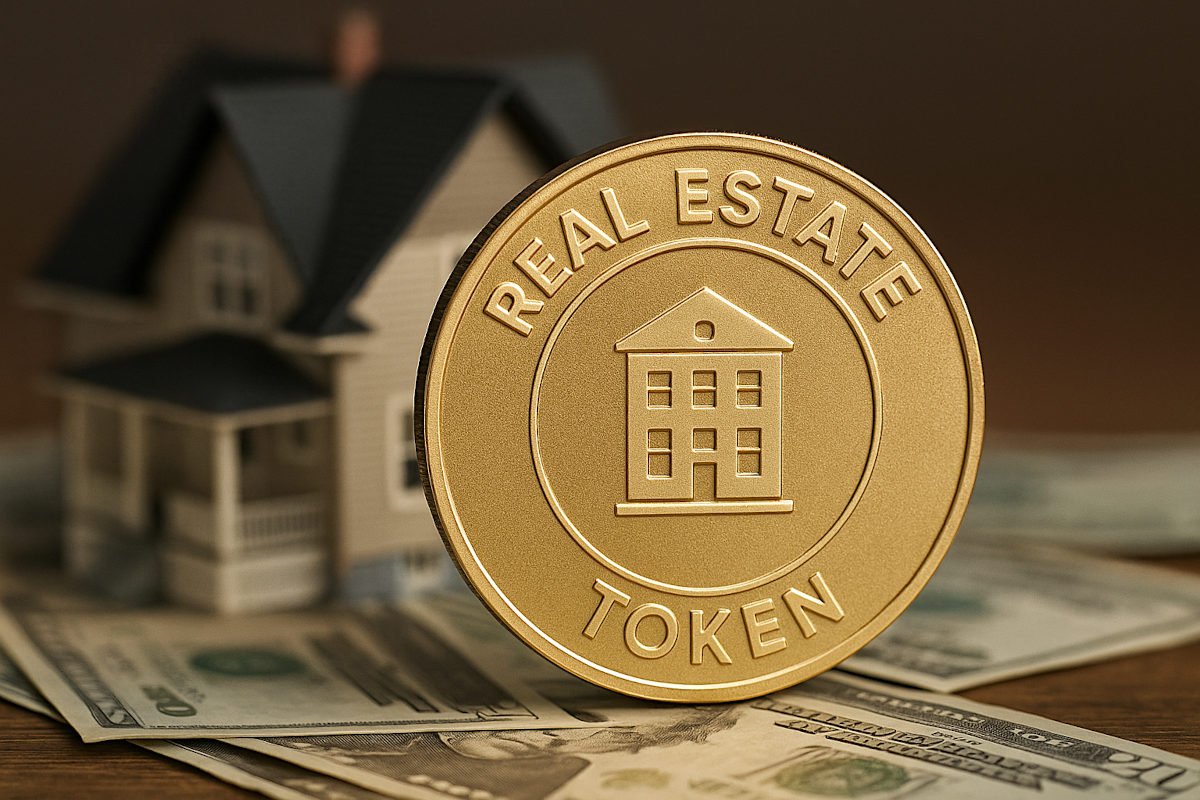
The next phase of property tokenization may depend less on blockchain experimentation and more on regulation, identity and legally recognized ownership
Real estate tokenization has spent years being presented as a technological revolution capable of fractionalizing property and opening traditionally illiquid assets to a broader investor base. A new systematic review published in September 2026 suggests that the more important question is increasingly institutional: how can tokenized real estate operate inside regulated markets while maintaining legally enforceable rights, identity controls, governance and secure transaction infrastructure?
The study, published in the Journal of King Saud University Computer and Information Sciences, reviewed 63 primary studies and examined real estate tokenization across architecture, ownership, transactions, certification, stakeholders, technology and adoption barriers. Its findings point toward a transition from registry-focused blockchain experiments toward marketplace-oriented models. But the authors emphasize that tokenization does not replace existing institutions. A digital token only has economic value when the underlying property right or investment claim is legally enforceable and recognized within the relevant regulatory framework.
This distinction is crucial for institutional investors. A blockchain can provide a technically reliable record, but the technology itself does not determine who legally owns a building. Real estate remains deeply connected to land registries, corporate structures, securities regulation, identity verification, taxation, valuation, custody and courts. The successful tokenized property market will therefore likely be one in which blockchain infrastructure becomes integrated with these institutions rather than attempting to bypass them.
Fractional ownership remains one of the most visible potential applications. Instead of requiring a single investor to acquire an entire building, an investment structure could theoretically divide economic interests into digital units. Investors could potentially obtain exposure to rental income or capital appreciation through smaller positions, while the underlying property remains held through an appropriate legal entity or structure.
But fractionalization is only the beginning. Institutional tokenization could eventually support more sophisticated functions: automated distributions, programmable compliance, digital transfer restrictions, transparent ownership records, faster settlement, improved audit trails and potentially more efficient secondary markets. The technological architecture becomes particularly interesting when multiple participants—investors, asset managers, registries, banks, custodians and regulators—can interact through interoperable systems.
The recent academic evidence also highlights the challenges. Identity assurance, legal enforceability, governance, privacy, interoperability, continuous security monitoring and long-term cryptographic resilience are among the requirements identified for regulated deployment. These are not secondary technical details. They are the infrastructure upon which institutional confidence depends.
For large investors, the real opportunity may therefore be less about buying a tokenized apartment and more about the financial infrastructure that tokenization could create around entire portfolios. Imagine a future in which thousands of properties can be represented digitally, ownership structures are machine-readable, compliance rules are embedded into transactions and investors can analyze portfolios through a standardized data layer.
That would transform tokenization from a retail-oriented novelty into an institutional operating system.
The market is not there yet. Much of the academic literature remains dominated by prototypes, simulations and conceptual frameworks, and legal structures vary significantly by jurisdiction. But the direction of research is becoming clearer. The central question is no longer whether a property can be represented digitally. It is whether the entire legal, financial and institutional ecosystem surrounding that property can become interoperable.
For Aurivance, that distinction is essential. The future of tokenized real estate will probably not be determined by the most spectacular blockchain demonstration. It will be determined by who can connect property rights, capital, compliance, identity, data and liquidity into a system investors can trust.
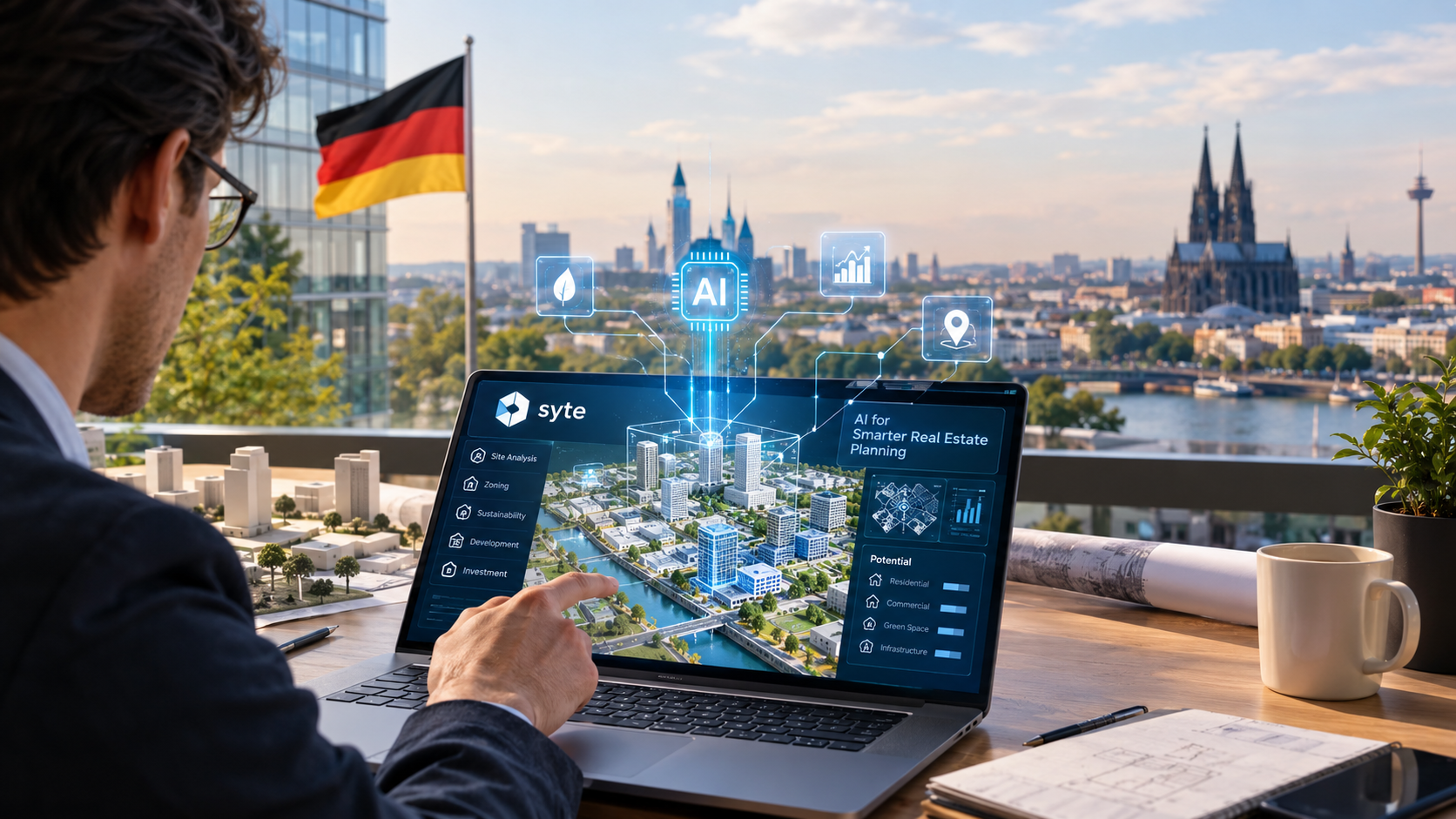
A PropTech platform is using artificial intelligence to compress weeks of early-stage property analysis into minutes
Real estate development has traditionally depended on fragmented information. Developers, banks, architects and investors often need to evaluate land ownership, planning rules, zoning, building potential, renovation requirements, energy performance and economic feasibility before capital can be committed. German PropTech company syte is attempting to automate that process. The company announced in September 2026 that it had raised €9 million in a Series A funding round to expand its AI-powered land and real estate analytics platform across Europe.
The company combines large amounts of land and building data with proprietary artificial intelligence to evaluate what can potentially be built on a particular site, which legal and planning requirements may apply and whether a project could make economic sense. According to High-Tech Gründerfonds, the platform maps more than 62 million parcels in Germany and is already used by more than 200 customers for valuation, planning, investment analysis and portfolio assessment. The company says processes that can otherwise take weeks can be reduced to minutes.
The importance of the technology is easy to underestimate because it operates before construction begins. Yet the earliest stage of a property project is where enormous amounts of value can be created or destroyed. A developer that discovers late in the process that a site cannot support the intended building, that planning restrictions are more severe than expected or that renovation economics do not work may already have invested significant time and capital. Automating preliminary analysis can therefore change the economics of development even without changing the physical construction process.
The company is particularly interesting because its business model illustrates a broader shift in PropTech. Earlier generations of real estate software often focused on administration, listings, accounting or customer relationship management. The new generation is moving deeper into decision-making. AI is being used to answer questions such as: What can be built here? What might it cost? Which regulatory constraints apply? Which properties require renovation? Where are hidden development opportunities?
For institutional investors, this creates a potential competitive advantage. A large portfolio contains thousands or even millions of individual data points. Human teams cannot evaluate every parcel with the same depth. Machine-assisted analysis can instead identify a smaller set of properties that deserve human attention. The technology does not eliminate investment judgment; it changes where that judgment is applied.
syte’s €9 million financing is therefore less interesting as a startup funding headline than as a signal of where the real estate technology market is heading. The company says its recurring revenue doubled year-on-year and that it intends to expand beyond Germany into the wider European market.
The broader opportunity is the creation of a machine-readable real estate market. If every parcel, building, planning rule, energy characteristic and economic variable can be digitally represented and analyzed, investors can move from searching for properties to systematically discovering opportunities.
That transition is particularly relevant to the future of Aurivance. The next generation of real estate intelligence will not simply tell investors what happened. It will help them understand what could happen on a particular piece of land, in a particular building or across an entire portfolio. AI-powered property intelligence could ultimately become one of the most important layers between raw real estate data and investment decisions.

-
hese 10 countries stand out in 2026 for their combination of ROI, stability, lifestyle, and legal frameworks favorable to foreign investors. Here’s an in-depth look at each:
1. Mexico 🇲🇽 – Estimated ROI: 8%–13%
Recommended Areas: Tulum, Playa del Carmen, CancúnMexico stands out for its blend of natural beauty, low cost of living, and high profitability. Tulum and Playa del Carmen are world-class destinations with white sand beaches, cenotes, and Mayan ruins, attracting thousands of tourists and digital nomads monthly. Cancún, with its international airport and luxury resorts, draws global tourism. The Riviera Maya offers a balance of pristine nature and modern amenities. Continuous infrastructure improvements like the Tren Maya boost its appeal further. Properties appreciate quickly, and Airbnb yields high annual occupancy. Legal trusts (fideicomisos) ensure safe purchases by foreigners. In many tourist areas, ROI exceeds 10%, making Mexico a gem both for living and generating income.
2. Portugal 🇵🇹 – Estimated ROI: 7%–10%
Recommended Areas: Algarve, Setúbal, PortoPortugal has moved up the ranking as one of the fastest-growing property markets in the world: home prices have climbed roughly 48% over the past five years, and the momentum has held into 2026. The Algarve features stunning beaches, top-tier golf courses, and charming fishing villages perfect for vacation rentals. Setúbal continues growing as a luxury second-home area, while Porto stays trendy thanks to its culture and wine scene. High safety, a moderate cost of living, and steadily rising property values make Portugal a standout for both lifestyle and income — particularly for investors from Northern Europe and North America.
3. Costa Rica 🇨🇷 – Estimated ROI: 8%–12%
Recommended Areas: Tamarindo, Nosara, GuanacasteCosta Rica is known for its political peace, economic stability, and environmental consciousness. Pacific beaches like Tamarindo and Nosara offer lush landscapes, world-class surfing, and a laid-back lifestyle. The eco-friendly approach attracts conscious investors and tourists looking for authentic experiences. No capital gains tax on real estate is a major advantage. Guanacaste combines natural beauty with high tourism demand and a growing expat and retiree community. Remote work is encouraged, and high-speed internet is available even in coastal zones. Buying is easy for foreigners, and the vacation rental market remains strong.
4. Dubai 🇦🇪 – Estimated ROI: 5%–8%
Recommended Areas: Downtown, Marina, JVC, Business BayDubai still blends luxury, safety, world-class infrastructure, and unique tax advantages — no income or real estate capital gains tax. It remains a global hub for business, tourism, and tech, attracting international talent and capital. Downtown and Marina areas feature futuristic architecture in high demand from tourists and executives alike, while JVC caters to a growing middle class seeking modern apartments. Yield expectations have moderated somewhat compared with the peak years: modern flats in districts like Business Bay and Jumeirah Village Circle now average 5%–7% rental returns, still supported by high occupancy and strong long-term rental demand.
5. Colombia 🇨🇴 – Estimated ROI: 8%–10%
Recommended Areas: Medellín, CartagenaColombia remains a top destination for high returns and low entry costs. Medellín has transformed into a modern, innovative city with eternal spring weather, great cuisine, and efficient transport. El Poblado is a favorite among digital nomads with coworking spaces, cafés, and nightlife. Cartagena offers Caribbean beaches and colonial history with strong international tourism. Foreign investment in property continues rising, and Airbnb activity is booming. Real estate is still very affordable, and urban renewal projects keep boosting downtown values.
6. Greece 🇬🇷 – Estimated ROI: 7%–10%
Recommended Areas: Athens, Crete, SantoriniGreece offers history, Mediterranean beauty, and Schengen zone access. Athens combines ancient charm with modern living, making it ideal for long-term and urban rentals. Islands like Crete and Santorini boast turquoise waters and whitewashed architecture, ranking among the most sought-after tourist spots in Europe. Seasonal rental demand is very high, and although property prices keep rising, they remain competitive. The Golden Visa program has attracted foreign investors since 2013, and Greece has stabilized its economy and upgraded tourism infrastructure.
7. Spain 🇪🇸 – Estimated ROI: 6%–9%
Recommended Areas: Málaga, Alicante, Costa del SolSpain offers a perfect climate, globally recognized beaches, and a top-tier transport network. Costa del Sol boasts over 300 days of sunshine per year, attracting European tourists and investors. Málaga is booming with new cultural, tech, and urban projects. Alicante blends traditional architecture, sea life, and affordability. Spain has clear property laws, and short-term rental demand keeps rising. Investor visas are available for non-EU citizens, and coastal areas retain value over time thanks to high tourist turnover.
8. United States 🇺🇸 – Estimated ROI: 7%–10%
Recommended Areas: Miami, Tampa, Austin, PhoenixThe U.S. remains one of the world’s most transparent and stable markets. Miami offers glamour, sun, and top Airbnb demand. Tampa and Phoenix are booming with population growth and affordability. Austin mixes tech, youth, and strong rental demand. Property laws favor landlords, and investors can use LLCs or trusts to purchase from abroad, with flexibility for long-term rentals, vacation rentals, or flipping.
9. Türkiye 🇹🇷 – Estimated ROI: 5%–7% (new entry)
Recommended Areas: Antalya, IstanbulTürkiye has climbed into the top tier of yield-driven markets through 2026. Seafront apartments in Antalya and Istanbul typically deliver around 6% yields, supported by growing domestic and foreign buyer interest. Relatively low entry prices compared to Western Europe, combined with strong tourism-driven short-term rental demand, make it an increasingly attractive pick for investors chasing cash flow rather than pure appreciation.
10. Georgia 🇬🇪 – Estimated ROI: 6%–7% (new entry)
Recommended Areas: TbilisiGeorgia has emerged as one of the standout rental-yield markets in the region. In Tbilisi, short-term rentals can generate up to 7% annually, driven by strong demand from tourists and remote workers. Low property costs, straightforward foreign-ownership rules, and a growing digital-nomad scene support the case for Tbilisi as an accessible, high-yield entry point.
Summary Table
Rank Country Recommended Areas Estimated ROI Key Benefits 1 Mexico 🇲🇽 Tulum, Playa del Carmen, Cancún 8%–13% Rapid appreciation, tourist demand, Airbnb-friendly, strong legal framework 2 Portugal 🇵🇹 Algarve, Setúbal, Porto 7%–10% Strong five-year price growth, tax-friendly, growing expat interest 3 Costa Rica 🇨🇷 Tamarindo, Nosara, Guanacaste 8%–12% Eco-lifestyle, tax advantages, growing digital nomad presence 4 Dubai 🇦🇪 Downtown, Marina, JVC, Business Bay 5%–8% No taxes, futuristic city, strong occupancy 5 Colombia 🇨🇴 Medellín, Cartagena 8%–10% Affordable, high demand, rising international profile 6 Greece 🇬🇷 Athens, Crete, Santorini 7%–10% Golden Visa, strong seasonal rental market 7 Spain 🇪🇸 Málaga, Alicante, Costa del Sol 6%–9% Sunshine, legal clarity, rising tourism 8 USA 🇺🇸 Miami, Tampa, Austin, Phoenix 7%–10% Transparent markets, legal security, flexible strategies 9 Türkiye 🇹🇷 Antalya, Istanbul 5%–7% Low entry cost, strong coastal rental yields 10 Georgia 🇬🇪 Tbilisi 6%–7% High short-term rental yields, easy foreign ownership Sources:
Immigrant Invest
Benoit Properties
Mirabello Consultancy
Estate Agent Power
Elite Luxury Real Estate


