

Agenda
Investing in the World’s Tallest Buildings

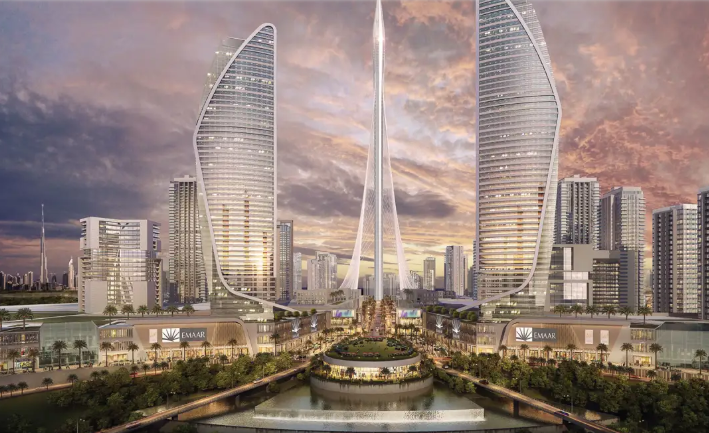
Investing in the World’s Tallest Buildings: The 2026 Playbook for Supertall Real Estate
Real estate tied to the world’s tallest buildings continues to sit in a category of its own. These towers are not simply large buildings — they are engineered scarcity, occupying irreplaceable positions in global financial hubs, commanding tenant and buyer premiums that ordinary Grade-A stock cannot match, and generating income from far more than rent alone. As of September 2026, the five tallest completed buildings on Earth, ranked by the Council on Tall Buildings and Urban Habitat, are Burj Khalifa in Dubai, Merdeka 118 in Kuala Lumpur, Shanghai Tower, the Makkah Royal Clock Tower in Saudi Arabia, and the Ping An Finance Centre in Shenzhen. Together they offer a useful cross-section of how supertall real estate actually performs as an investment class — and where the risks sit.
Burj Khalifa, Dubai, UAE — 828 meters, 163 floors
Burj Khalifa has held the title of world’s tallest building since 2010 and, at 828 meters, still leads its nearest rival by close to 150 meters — a margin that has remained essentially unchallenged for fifteen years. Developed by Emaar Properties, the tower is a mixed-use asset combining luxury residences, corporate offices, the Armani Hotel and extensive retail, with residential units historically transacting at premium pricing in Dubai’s ultra-prime segment. The investment case rests less on any single income line than on the combination: residential sales and rentals, office leasing, hotel operations, and one of the highest-grossing observation decks in the world, all under one address whose brand value alone commands a premium over otherwise comparable Downtown Dubai product. Emaar itself remains one of the most closely watched developers globally — the company’s chairman confirmed this year that Dubai hotel occupancy has recovered to around 60 percent after dipping sharply during regional conflict, and Emaar is preparing a roughly $55 billion urban development for once conditions stabilize further, underscoring the scale of capital still committed to the emirate’s built environment.
Merdeka 118, Kuala Lumpur, Malaysia — 678.9 meters, 118 floors
Completed in 2023 and developed by state-linked investment fund Permodalan Nasional Berhad, Merdeka 118 is the world’s second-tallest building and the tallest in Southeast Asia. The tower combines offices, a Park Hyatt hotel, retail and residential space in Kuala Lumpur’s financial district, and its sustainability credentials — energy-efficient systems designed to meet international green-building standards — have made it a reference point for ESG-oriented institutional capital looking at Southeast Asian office exposure. For multinational tenants seeking a single prestige address in Kuala Lumpur, Merdeka 118 functions similarly to how Petronas Towers did a generation earlier: an anchor asset whose scarcity value supports premium rents even as broader Kuala Lumpur office stock faces more competitive, oversupplied conditions.
Shanghai Tower, Shanghai, China — 632 meters, 128 floors
Shanghai Tower, the world’s tallest twisting skyscraper, anchors Shanghai’s Lujiazui financial district alongside the Shanghai World Financial Center and Jin Mao Tower, forming one of the most concentrated clusters of supertall office space anywhere on Earth. Owned and operated by Shanghai Tower Construction & Development, the building combines Grade-A offices, a Jin Jiang-operated luxury hotel, retail and one of the world’s highest observation decks. Its investment profile is distinct from the Gulf and Southeast Asian towers on this list in one important respect: as a state-linked asset in a market where foreign direct ownership of trophy office towers is tightly controlled, exposure for international investors typically comes indirectly, through listed developers, REIT-like vehicles, or joint-venture leasing arrangements with multinational tenants, rather than through direct equity ownership of the tower itself.
Makkah Royal Clock Tower, Mecca, Saudi Arabia — 601 meters, 120 floors
The Makkah Royal Clock Tower is the tallest hotel building in the world and the anchor of the Abraj Al-Bait complex overlooking the Masjid al-Haram, the holiest site in Islam. Its investment profile is unlike any other building on this list: demand is driven not by corporate tenancy or luxury residential appeal but by religious pilgrimage, with the Hajj and Umrah seasons generating extraordinarily high and highly predictable occupancy for the Fairmont-operated hotel component. Saudi Arabia’s broader push to expand religious tourism capacity — alongside the kingdom’s parallel real estate opening measures, including its newly operational foreign property ownership framework and the Public Investment Fund’s coastal development pipeline — makes Mecca’s hospitality-anchored supertall real estate one of the more insulated income profiles in this category, largely uncorrelated with the global office and luxury residential cycles that drive the other towers on this list.

Ping An Finance Centre, Shenzhen, China — 599.1 meters, 115 floors
Built as the headquarters for Ping An Insurance, China’s second-largest insurer, the Ping An Finance Centre anchors Shenzhen’s Futian central business district and is directly integrated with the city’s metro network and the Guangzhou–Shenzhen–Hong Kong high-speed rail link — a degree of transit integration that is itself a meaningful driver of long-term tenant demand in a city that has grown to nearly 13 million people since its designation as a Special Economic Zone. More than 100 floors of office space, occupied principally by Ping An and its financial-services subsidiaries, sit above a retail podium and conference facilities, with a public observation deck and private club occupying the pyramidal crown. As with Shanghai Tower, direct foreign equity access is limited; the more realistic route for outside investors is indirect, through listed Chinese financial and property vehicles or leasing relationships, rather than acquiring a stake in the tower itself.
Why Supertall Real Estate Behaves Differently From Ordinary Prime Assets
Several structural features distinguish these buildings from conventional trophy office or residential towers, and they explain why supertall assets have historically commanded a premium even through real estate downturns. First is brand value: a Burj Khalifa or Merdeka 118 address functions as a marketing asset in its own right for corporate tenants and luxury buyers, which supports occupancy and pricing power independent of local market softness. Second is revenue diversification — nearly every building on this list blends office, hospitality, residential and tourism income streams under a single roof, which cushions the asset against a downturn in any single sector in a way a pure-play office tower cannot replicate. Third, and increasingly relevant to ESG-focused institutional capital, is sustainability positioning: newer entrants to the supertall category, Merdeka 118 chief among them, have been designed from the outset to meet international green-building certification standards, a factor that is becoming a genuine underwriting criterion rather than a marketing footnote for large allocators.
The Access Problem — and Where Tokenization Genuinely Fits
The single biggest constraint on investing in this category is access. These are, almost without exception, either sovereign-linked, state-owned or closely held corporate assets, meaning direct equity ownership is simply not available to most investors, institutional or individual. That access gap is precisely why real estate tokenization has drawn serious institutional attention over the past two years — not as a retail gimmick, but as a genuine mechanism for fractionalizing ownership of otherwise inaccessible trophy assets. Dubai’s Land Department, working with the Virtual Assets Regulatory Authority and the Central Bank of the UAE, has already launched a pilot phase of blockchain-based real estate tokenization specifically framed around expanding fractional ownership and international participation in the emirate’s property market. Academic and regulatory frameworks published this year have likewise moved tokenization from experimental blockchain use case toward regulated market infrastructure, emphasizing that the technology is best understood as augmenting existing ownership and regulatory structures rather than replacing them.
For investors specifically interested in supertall and trophy real estate, the realistic paths to exposure today remain listed developer equity — Emaar Properties for Dubai exposure, PNB-linked vehicles for Merdeka 118, listed Chinese property and insurance names for Shanghai Tower and Ping An Finance Centre — alongside REITs holding comparable trophy assets, and a still-nascent but regulator-backed tokenization market that is worth monitoring closely rather than entering on the basis of any single platform’s marketing claims. As with any emerging asset-access mechanism, the platforms offering fractional or tokenized exposure vary enormously in regulatory standing, custody arrangements and transparency, and warrant the same due diligence an investor would apply to any unlisted vehicle — verified regulatory registration, clear custody of the underlying asset, and an audited link between the token and actual title or economic rights, rather than marketing promises of low minimums and instant liquidity.
The Bottom Line
Supertall buildings remain among the most resilient trophy assets in global real estate precisely because so little new competing supply can realistically be built — each of the towers above required years of specialized engineering, extraordinary capital outlay and, in several cases, direct government or sovereign backing to complete. That scarcity is the entire investment thesis. The risk for investors is less about the buildings themselves and more about the access route chosen to reach them: direct ownership is largely closed, indirect listed exposure carries the operating and governance risk of the parent developer or state entity, and the tokenization route, while increasingly credible where regulators like Dubai’s are directly involved, still requires far more scrutiny of the platform than of the underlying asset.

Sustainable Real Estate in 2026: A Ranking Reshuffle and What It Means for ESG-Focused Capital
Real estate’s sustainability leaderboard looks meaningfully different heading into the back half of 2026 than it did even twelve months ago — not because the sector’s underlying ESG commitments have weakened, but because the industry’s most-watched scorecard, the Corporate Knights Global 100 Most Sustainable Corporations ranking, overhauled its methodology this year in a way that has reshuffled the entire list, real estate included.
Why the Ranking Changed
The 2026 edition of the Global 100 introduced a new core metric called sustainable revenue momentum — how fast a company is growing the share of its revenue tied to sustainable activities — which now accounts for a full third of every company’s score, alongside overall sustainable revenues and sustainable investments. The effect was immediate and dramatic: Italian renewable energy producer ERG SpA, ranked just 18th a year earlier, jumped to first place in 2026, while Schneider Electric, last year’s top performer, fell all the way to 40th. Thirty-seven companies entered the ranking for the first time this year and 33 dropped off entirely — a level of turnover that Corporate Knights’ director of rankings, Michael Yow, has explicitly framed as a deliberate signal that speed of transition now matters as much as absolute sustainability performance. For real estate specifically, that shift rewards companies actively growing green-certified, energy-efficient and renewable-powered portfolios faster than peers, rather than simply companies that reached a high sustainability baseline years ago and have since plateaued.
City Developments Limited Remains the Sector’s Clearest Global 100 Representative
Amid that turnover, City Developments Limited (CDL) has held its position as Singapore’s — and one of the world’s — most consistently ranked sustainable real estate companies, landing at 69th place in the 2026 Global 100 and retaining its billing as Singapore’s top-ranked real estate and leasing company on the index. That continuity matters more this year than in past editions precisely because so many companies fell off the list entirely under the new momentum-weighted methodology; CDL’s survival reflects sustained, measurable progress rather than a one-time ESG initiative. The company’s net-zero-by-2030 operational target remains in place, built around continued emissions reductions since its 2017 baseline, an expanding solar footprint across its portfolio, and integration of low-carbon materials into new developments — with the added dimension in 2026 of leaning more heavily into smart-building and circular-economy design principles as differentiators in an increasingly crowded field of ESG-branded developers across Asia.
Prologis: Still a Sustainability Leader, But Not Necessarily on This Year’s List
Prologis remains one of the most closely watched names in sustainable logistics real estate, and 2026 has brought a fresh round of external recognition — the company was named to Fast Company’s 2026 World’s Most Innovative Companies list in the Urban Development & Real Estate category, to Fortune’s 2026 World’s Most Admired Companies list for a fifth consecutive year, and previously to TIME’s World’s Most Sustainable Companies list. Notably, though, Prologis’ own current list of sustainability accolades does not include a 2026 Global 100 placement, a departure from the company’s long run on that particular index through 2024. Whether that reflects the new momentum-weighted methodology penalizing an already-mature sustainability program, changes in how REITs are scored this cycle, or simply a normal year-to-year fluctuation in a list that saw a third of its constituents turn over, is not fully clear from public disclosures — but it is a reminder that even best-in-class ESG performers are not guaranteed permanent placement on a ranking that has explicitly redesigned itself to reward acceleration over accumulated achievement. On substance, Prologis’ underlying sustainability program continues largely unchanged: net-zero logistics facility targets, extensive green bond financing, and continued build-out of on-site solar and renewable power procurement across its global industrial portfolio remain core to its investor pitch regardless of any single index placement.
CapitaLand and the Broader Asia-Pacific Field
CapitaLand Investment continues to pursue its carbon-neutrality-by-2050 target with an interim 46 percent reduction goal by 2030, and remains active across green-certified commercial and retail development in Singapore and the broader region. Corporate Knights has separately begun publishing more granular regional rankings alongside the flagship Global 100 — including a newly expanded Asia Pacific 50 Most Sustainable Corporations list — which gives investors a more localized view of how Asia-Pacific real estate players are performing relative to regional peers rather than only against global industrial giants, a useful lens given how differently sustainability regulation and green-financing incentives are structured across Singapore, mainland China and the rest of the region.
Digital Realty and the Data Center Real Estate Wrinkle
Digital Realty’s sustainability profile has become more consequential in 2026 precisely because data center real estate has become one of the fastest-growing property types globally, driven by AI infrastructure buildout. With a market capitalization now above $54 billion, Digital Realty’s continued commitment to 100 percent renewable-powered facilities and LEED certification targets places it at the center of a genuinely new tension in real estate ESG: data centers are simultaneously among the most energy-intensive property types to operate and among the most capital-intensive to build, meaning their sustainability credentials now carry outsized weight in how the broader real estate sector’s carbon footprint is perceived by regulators and institutional allocators alike.
European Regulation Continues to Tighten the Baseline
The regulatory backdrop that made ESG “a strategic imperative” in 2025 has, if anything, hardened further in 2026. The European Union’s target of a 55 percent reduction in emissions by 2030 remains the binding baseline against which EU-exposed real estate portfolios are measured, and companies like Inmobiliaria Colonial continue to integrate green certifications and energy-efficient retrofits into their office portfolios specifically to stay ahead of that regulatory curve rather than simply to capture a marketing advantage. For institutional investors, this increasingly means that ESG compliance in European real estate has shifted from a differentiator to a baseline license to operate — non-compliant office stock risks accelerated obsolescence as green-certified space commands both rent premiums and lower vacancy.
What This Means for Elite and Institutional Investors
The core takeaway for 2026 is not that sustainability has become less important in real estate — every indicator suggests the opposite, with green-certified assets continuing to command higher rents and lower vacancy than uncertified comparables. Rather, the lesson is that the scorecards investors have relied on to identify sustainability leaders are themselves evolving quickly, and a company’s historical ranking is no longer a reliable proxy for current performance. Corporate Knights’ pivot toward rewarding momentum over accumulated achievement means investors evaluating real estate companies on ESG credentials in 2026 should weight the trajectory of a company’s green revenue and green financing activity at least as heavily as its absolute certifications and legacy rankings — a more dynamic, and considerably more demanding, standard than the one that defined the 2019 Global 100 cohort this note originally tracked.

Digital Twins in Metaverse Real Estate: Revolutionizing Property Markets
Explore how digital twins in the metaverse are transforming real estate with immersive marketing, secure ownership, and sustainable management. Learn about their benefits and a real-world case study.
Meta Description: Discover how digital twins in metaverse real estate enhance marketing, investment, and sustainability. Dive into the Meta Residence One case study and the future of virtual property markets.
The Role of Digital Twins in Metaverse Real Estate
Digital twins, virtual replicas of physical properties enriched with real-time data from IoT sensors and building management systems, are revolutionizing metaverse real estate. Powered by blockchain, NFTs, and IoT, these digital assets are reshaping how properties are marketed, sold, and managed in virtual environments like Decentraland and The Sandbox. Here’s how digital twins are transforming the industry:
-
Immersive Property Marketing: Digital twins enable virtual property tours, allowing buyers worldwide to explore homes or commercial spaces in detail, ideal for remote or under-construction properties.
-
Operational Efficiency: By integrating IoT data, digital twins monitor energy usage and HVAC systems, enabling predictive maintenance and reducing costs by up to 20% in office buildings.
-
Secure Investment Opportunities: Tokenized as NFTs on blockchain, digital twins ensure transparent ownership, enabling fractional investments and trading in virtual marketplaces.
-
Enhanced Design and Development: Architects use digital twins to simulate construction, optimize designs, and reduce risks before physical development begins.
The metaverse amplifies these capabilities, offering 3D environments where avatars can interact with digital twins, attend virtual open houses, or simulate living experiences, creating a hybrid physical-virtual real estate market.
Benefits of Digital Twins in the Metaverse
Digital twins bring transformative advantages to metaverse real estate:
-
Global Accessibility: Virtual properties attract tech-savvy international buyers, eliminating the need for physical travel.
-
Transparency and Security: Blockchain-backed NFTs provide verifiable ownership, reducing fraud and intermediaries.
-
Sustainability: Real-time data optimizes energy consumption, supporting eco-friendly real estate practices.
-
High ROI Potential: Virtual properties saw an 879% price increase from 2019 to 2022, outpacing traditional real estate growth.
However, risks like market volatility and platform dependency exist. If a metaverse platform declines, virtual properties may lose value rapidly.
Case Study: Meta Residence One in The Sandbox
A standout example of digital twins in metaverse real estate is Meta Residence One, developed by Sierra in The Sandbox, an Ethereum-based metaverse platform. In 2022, Sierra acquired a virtual plot for $10,000 and collaborated with Voxel Architects to create a digital twin of a luxury residence, mirroring its physical counterpart. The interactive 3D model, listed for auction in March 2022, aimed for a $10 million sale for the combined physical and virtual assets.
Key highlights of Meta Residence One:
-
Hybrid Value: The digital twin enhanced the physical property’s appeal, offering a virtual space for events and digital asset showcases.
-
Immersive Experience: Buyers explored the virtual home via avatars, experiencing its design and ambiance in The Sandbox.
-
Investment Appeal: The NFT status allowed trading or fractional ownership, attracting diverse investors.
This project showcases how digital twins bridge physical and virtual real estate, creating new opportunities for developers and investors.
Future of Digital Twins in Metaverse Real Estate
The metaverse real estate market, valued at $500 million in 2021, is projected to grow 31% annually through 2028, driven by digital twins and blockchain. Advancements in 5G, AI, and Web3 will enhance accessibility and functionality, integrating AI-driven maintenance and decentralized ownership models.
Challenges include regulatory gaps for tokenized assets and the need for robust cybersecurity to protect digital twin data. Real estate professionals must adopt PropTech and partner with metaverse platforms to stay competitive.
Conclusion
Digital twins are redefining metaverse real estate, offering immersive experiences, operational efficiencies, and secure investment opportunities. The Meta Residence One case study illustrates their potential to blend physical and virtual property markets. As the metaverse evolves, digital twins will drive innovation, shaping the future of real estate in the metaverse.
Sources:
-
The Sandbox, Meta Residence One Case Study
-
Matterport, Digital Twins in Real Estate
-
Metamandrill, Metaverse Real Estate
-
Forbes Argentina, Real Estate vs. Metaverse
-
CBRE UK, Digital Twins and Metaverse
-
Posts on X discussing Digital Twin Tokens and real estate innovation
Related Articles:
-
How Blockchain is Transforming Real Estate
-
The Rise of NFTs in Virtual Property Markets


The Super Mansion Market in 2026

The Best Real Estate Business Models for the Elite in 2026

Investing in the World’s Tallest Buildings

Maldives: Eagle Hills Advances a $12 Billion Waterfront and Marina Vision

Dubai: Emaar’s $55 Billion Urban Bet
