

Business
Maldives: Eagle Hills Advances a $12 Billion Waterfront and Marina Vision

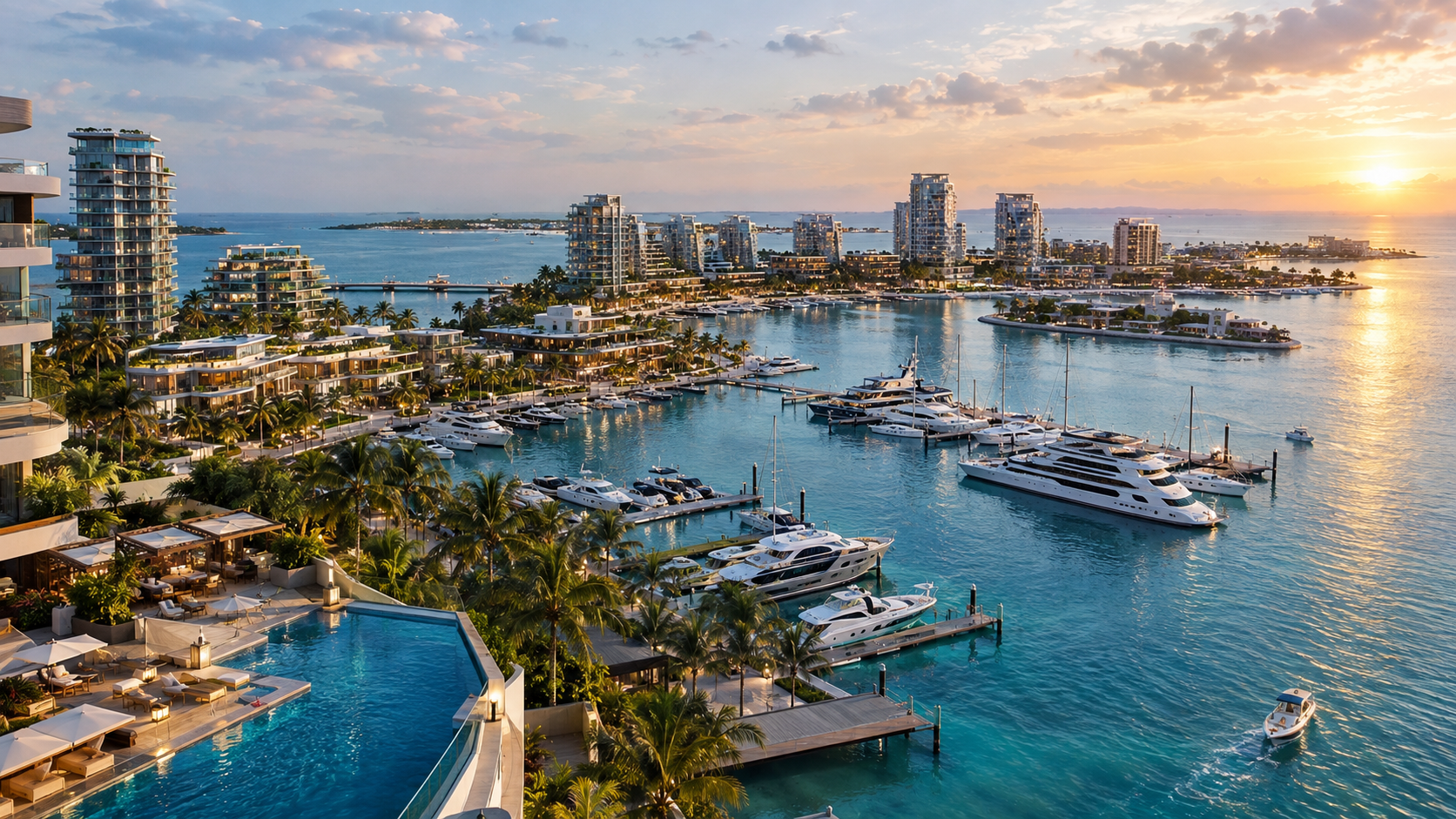
A $12 billion development vision is placing the Maldives at the centre of a new generation of large-scale island real estate
The Maldives has long been one of the world’s most recognizable luxury destinations, but the announcement of the Maldives Waterfront and Marina introduces a different proposition: the transformation of an island destination into a large-scale, integrated real estate, tourism, hospitality and maritime development platform. On September 21, 2026, the Government of Maldives and Abu Dhabi-based developer Eagle Hills signed a commercial terms agreement for the proposed Maldives Waterfront and Marina in the Ras Malé area. The overall development scale is envisioned at approximately $12 billion across multiple phases, making it one of the most ambitious real estate initiatives in the country’s history. The agreement establishes the principal commercial framework and shared vision, while detailed terms will continue to be developed as the project advances.
The significance of the proposal extends well beyond its headline valuation. The Maldives is a geographically constrained market in which land, connectivity, hospitality capacity and infrastructure are intrinsically connected. Unlike conventional metropolitan development, where new districts can expand across large contiguous areas, island development requires a much more sophisticated relationship between reclamation, maritime infrastructure, transportation, hospitality, residential supply, utilities and environmental considerations. A major waterfront and marina destination therefore represents not simply another luxury project, but an attempt to create a new economic node capable of attracting international capital, visitors, businesses and high-net-worth residents.
Eagle Hills, founded and chaired by Mohamed Alabbar, has increasingly positioned itself as an international developer of large-scale waterfront and destination-led projects. The Maldives initiative fits that broader model. Rather than concentrating exclusively on individual towers or standalone hotels, the concept revolves around an integrated destination in which residential real estate, hospitality, retail, leisure and marine infrastructure reinforce one another. For investors, that distinction is critical. A destination can potentially create multiple revenue streams and different classes of real estate value, allowing residential sales, hotel operations, marina activity, commercial uses and tourism expenditure to participate in the same economic ecosystem.
The proposed scale also illustrates how luxury real estate is changing in certain global destinations. The most valuable projects increasingly sell an entire environment rather than simply square metres. Waterfront access, branded hospitality, private residences, marina infrastructure, restaurants, retail, entertainment and curated experiences become components of a single investment proposition. In markets where land is inherently scarce, the ability to create a complete destination can become as important as the individual architecture of the buildings themselves.

According to Eagle Hills, the project is expected to have a substantial long-term economic impact, while The National reported company estimates suggesting the destination could attract more than one million visitors annually at maturity and potentially generate significant foreign investment over its lifetime. These figures should be treated as projections rather than completed outcomes. The commercial terms agreement is an important development milestone, but the ultimate investment schedule, financing structure, construction phases and realized economic impact remain dependent on subsequent agreements and execution.
For global investors, the Maldives story therefore deserves to be viewed through a wider lens. The opportunity is not merely the construction of luxury properties in an already famous destination. It is the creation of infrastructure capable of supporting a larger and more diversified premium economy. The central question will be whether the project can successfully convert the Maldives’ extraordinary natural scarcity and global brand into a durable, infrastructure-backed real estate ecosystem.
If successful, Maldives Waterfront and Marina could become an important case study in destination development: how a geographically constrained luxury market can attract billions of dollars by combining hospitality, residential real estate, marine infrastructure and international capital into a single long-term platform. For Aurivance, that makes the project relevant not simply as a luxury property story, but as a story about how global capital is redesigning the economics of island destinations.
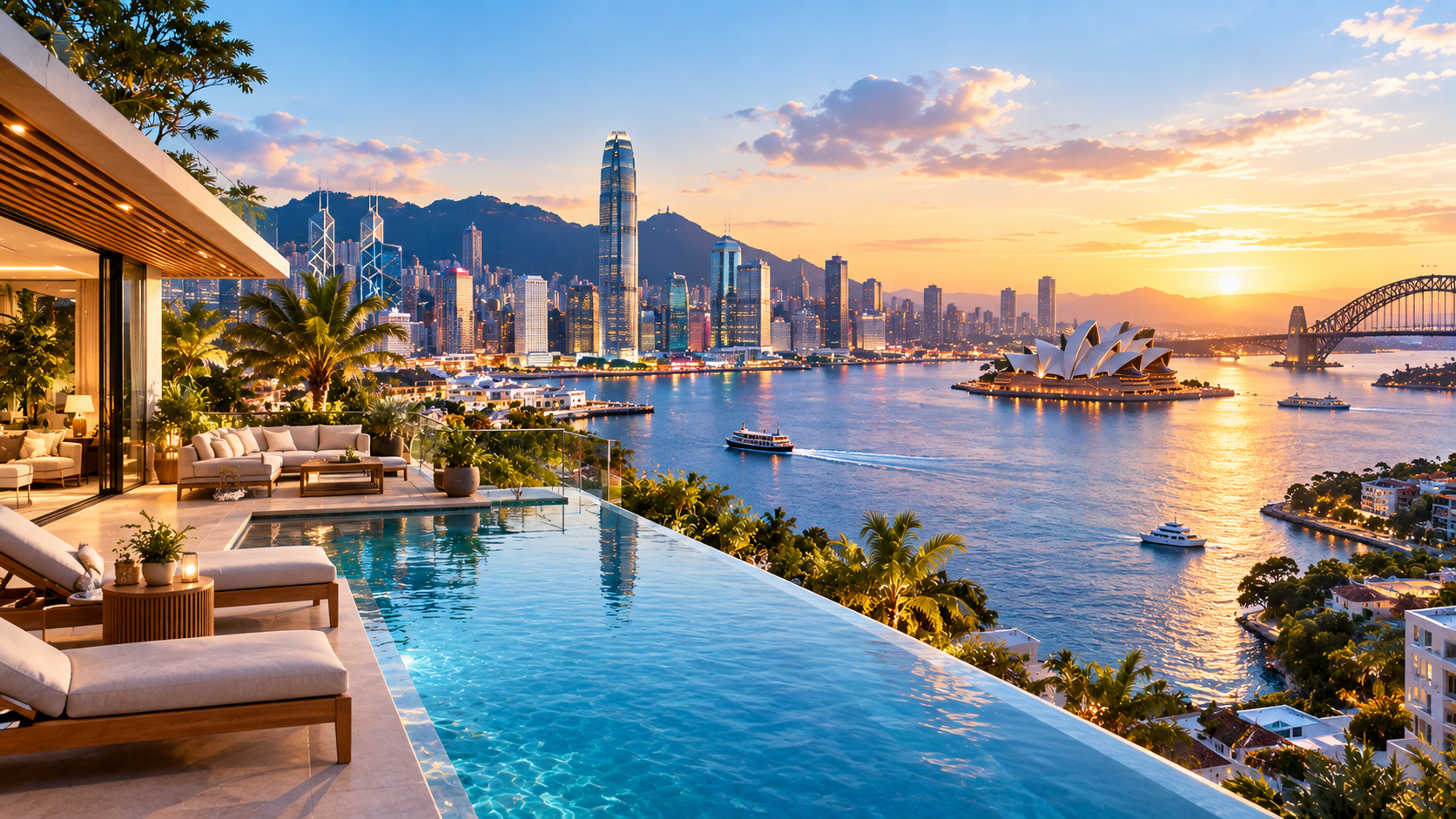
Asia-Pacific’s luxury property market is undergoing a geographic broadening that is beginning to reshape where the region’s wealthiest buyers and family offices concentrate their capital. For years, luxury real estate investment in the region clustered predictably around a handful of established hubs — Hong Kong, Singapore, Tokyo and Sydney chief among them. That pattern is loosening. Branded residences are expanding into a wider set of markets, new destinations are drawing sustained attention from international buyers for the first time, and family-office capital — increasingly the dominant force in the region’s hospitality sector — is following that expansion rather than confining itself to the traditional wealth capitals.
The forum circuit tracking this shift makes the trend visible in real time. IHIF Asia, held in Hong Kong in September and drawing more than 500 senior hospitality investors, owners and developers, dedicated significant programming to exactly this dynamic — capital flows, asset repricing, private credit and cross-border investment trends spanning Japan, Southeast Asia, Greater China and a widening set of emerging markets across the region. That agenda mirrors a parallel shift happening in the private wealth world: Campden Wealth’s Asia-Pacific Family Office & Investment Forum, one of the region’s most established closed-door gatherings for single-family offices and ultra-high-net-worth investors, has increasingly centered its discussions on how capital moves between Asia, the Middle East and the West, and on embedding real estate, infrastructure and alternative investments into multi-generational portfolio strategy rather than treating them as tactical allocations.
The Family Office Report 2026 for the APAC region, produced by Hospitality Investor, captures where that capital is actually landing — and the answer increasingly includes markets that would not have appeared on a family office’s shortlist five years ago. Serviced apartments, extended-stay product, branded residences and hybrid living concepts are drawing capital alongside traditional hotel assets, reflecting a buyer base that is thinking about real estate less as a single-purpose hospitality bet and more as a flexible platform that can capture multiple forms of demand — leisure travel, business travel, and increasingly, long-stay residents relocating within the region for work or lifestyle reasons.
Two forces are driving the broadening beyond the traditional hubs. The first is straightforward pricing logic: as Hong Kong, Singapore and Tokyo prime real estate has become more expensive and more competitively bid by institutional capital, family offices — which prize flexibility and are less constrained by index-hugging mandates — have simply followed better risk-adjusted returns into adjacent and emerging markets. The second is geopolitical. Regional tensions and fractured alliances are reshaping capital flows in ways that make single-hub concentration look increasingly risky to family offices managing multi-decade horizons, pushing many toward deliberate geographic diversification across Japan’s hospitality reset, Southeast Asia’s growth markets, and selective opportunities in Greater China.
For developers and operators positioning for this shift, the implication is that the next wave of Asia-Pacific luxury real estate capital will not arrive exclusively through the traditional channels of sovereign wealth funds and global private equity shops bidding on trophy towers in gateway cities. It will increasingly come from family offices moving with more speed, more flexibility and a genuine willingness to build first-mover positions in markets not yet fully discovered by institutional capital — a pattern that rewards operators and developers who can offer direct access and co-investment structures over those relying solely on traditional fund-raising channels. The risk, as with any early-mover thesis, is that some of these emerging destinations lack the depth of liquidity and exit options that make gateway-city luxury real estate a comparatively safer long-term hold — meaning the expanded opportunity set comes bundled with a genuine widening of the region’s risk spectrum as well.
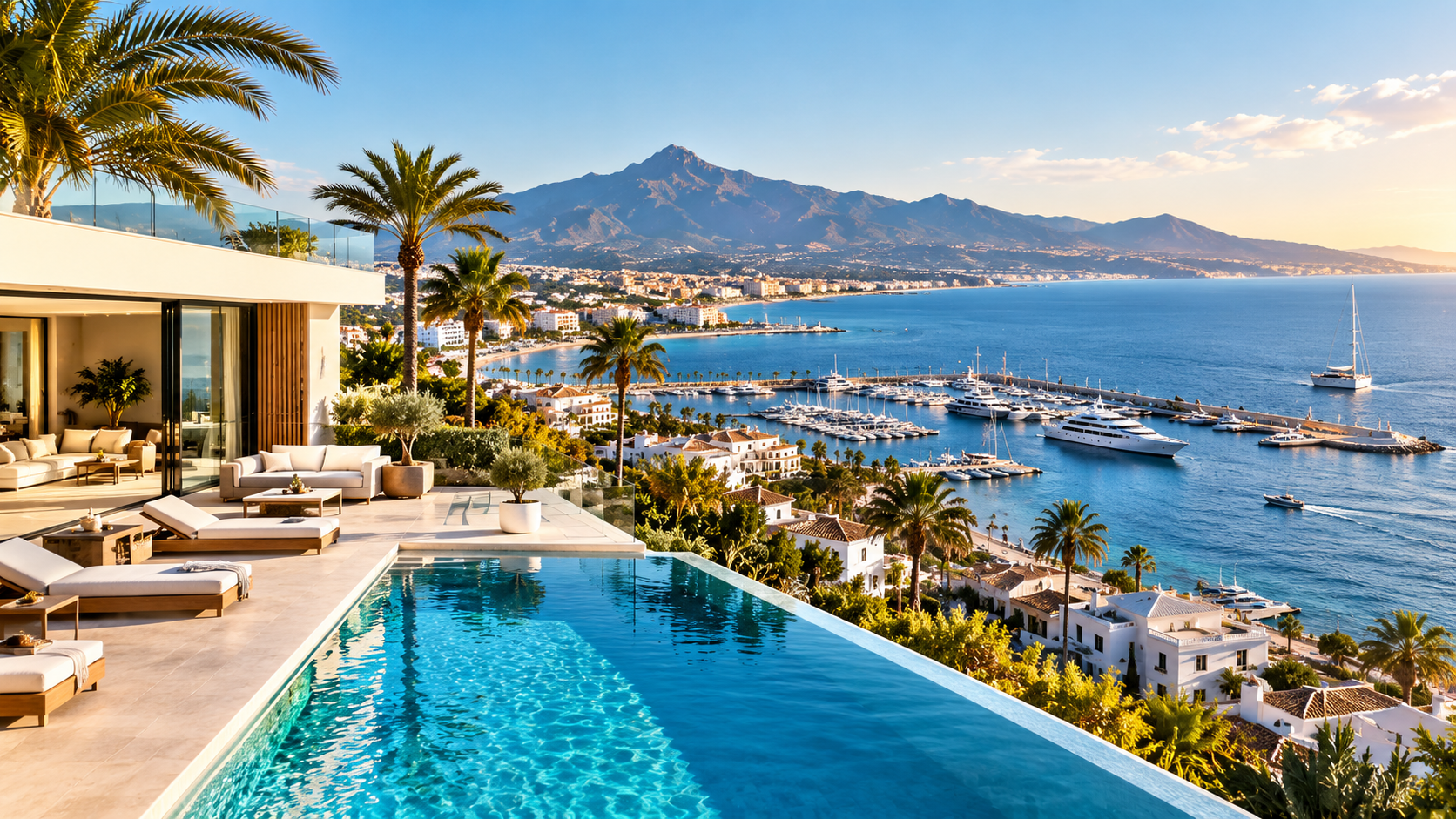
Marbella’s Leap From 35th to 5th Confirms Spain’s New Status in Global Luxury Real Estate
Marbella has vaulted into the top tier of global luxury real estate destinations, securing fifth place in the 2026 Barnes City Index — the benchmark ranking compiled by international luxury property firm Barnes to measure the appeal and influence of the world’s leading prime residential markets. The jump is not incremental: Marbella climbed from 35th position a year earlier to 5th in a single cycle, placing it in direct company with Madrid, Milan, Dubai and Miami among the destinations most preferred by individuals with at least $30 million in net assets, and ahead of long-established luxury capitals including the French Riviera and Monaco in the broader index.
The scale of that repositioning becomes clearer when set against underlying price data. According to Knight Frank’s Wealth Report 2026, prime residential prices in Marbella rose 8.1 percent over the past year — more than double the 3.2 percent average recorded across the 100 luxury markets tracked in Knight Frank’s Prime International Residential Index, where 73 of the 100 tracked locations posted gains in 2025 while 24 recorded declines. On Marbella’s Golden Mile specifically, beachfront pricing has topped €44,000 per square meter, a level that now puts the strip in the same pricing bracket as Monaco and St. Tropez — a striking convergence for a market that, within recent memory, was priced as a clear step below Europe’s most established luxury enclaves.
What is driving the shift is at least as important as the ranking itself, because it signals a structural change in Marbella’s buyer base rather than a cyclical price spike. For roughly two decades, the town’s international buyer pool was reliably British, Scandinavian, German and Dutch. That base has not disappeared, but it has been joined — and in some segments overtaken — by capital with very different origins. Buyers from the UAE, Qatar and Saudi Arabia, alongside Western expatriates based in the Gulf, have driven what several Costa del Sol agencies now describe as the most significant change in Marbella’s buyer composition in at least three years. American and Canadian buyers have grown in parallel, part of a broader pattern of North American capital diversifying into European prime markets from Lisbon to Athens.
At the national level, Spain’s positioning has strengthened alongside Marbella’s individual rise. Madrid holds the number one position globally on the Barnes City Index for a second consecutive year, and Spain overall ranks fourth in Europe by annual real estate investment activity, with roughly €16 billion managed and 28 percent year-over-year growth, according to Barnes’ Global Property Handbook 2026. That combination — a capital city commanding the top global ranking, plus a resort market breaking into the top five — has turned Spain into what regional brokers now describe as the leading entry point for prime international capital in Southern Europe, offering price levels still meaningfully below Paris, London or New York for comparable ultra-prime product.
The risk to this trajectory sits in supply and planning uncertainty rather than demand. Marbella has operated for a decade under an outdated 1986 urban plan following the 2015 annulment of a more current framework, with a new General Urban Plan not expected to gain definitive approval until 2026 and a full Urban Planning Ordinance not finalized until 2027 or 2028. That regulatory limbo has constrained new development even as demand accelerates, reinforcing scarcity in the prime segment — a dynamic that has, so far, supported price growth but that could equally choke off the supply response needed to sustain Marbella’s newly won position among the world’s five most desirable addresses for the ultra-wealthy.
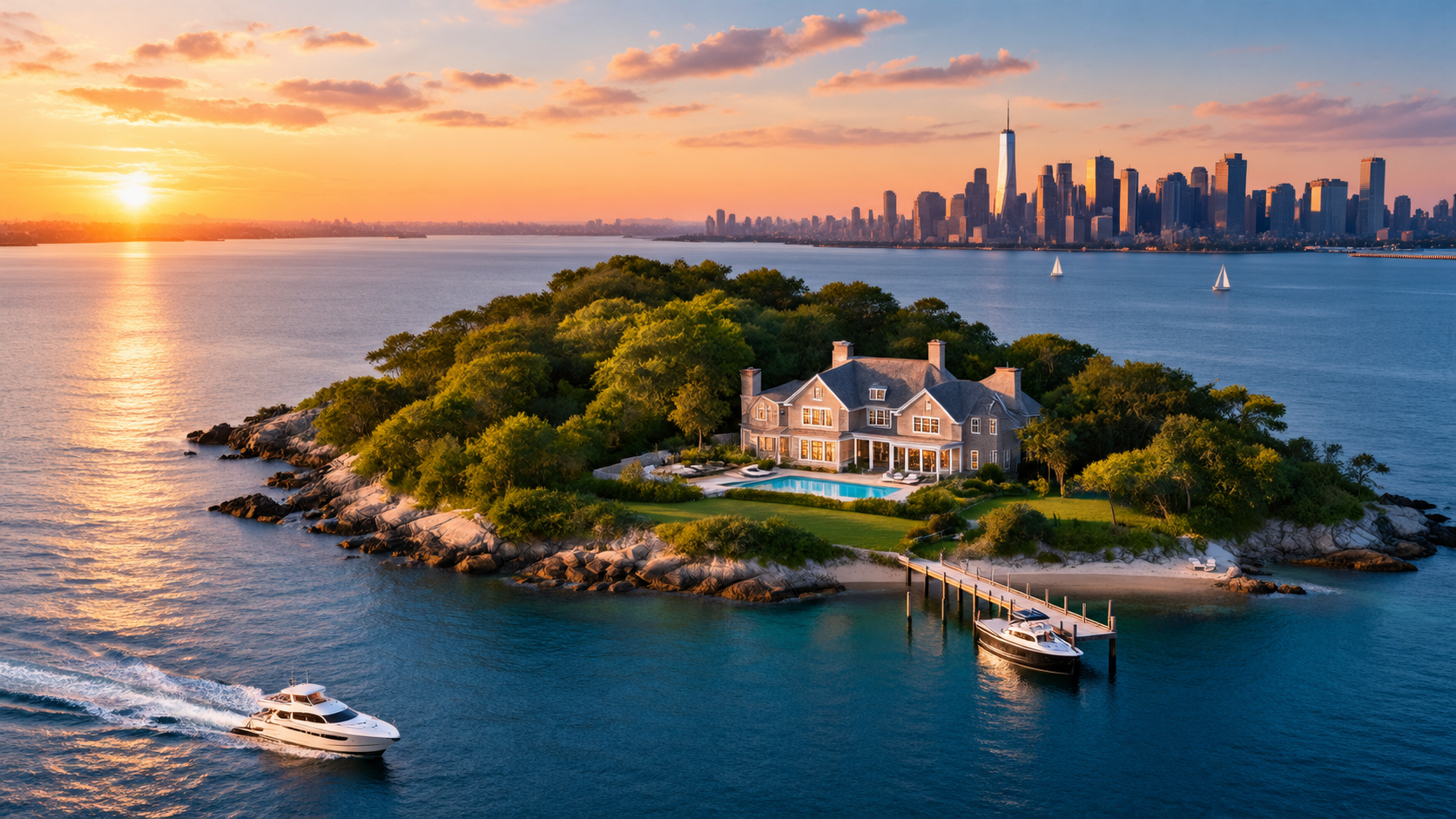
A Private Island Near New York Hits the Market for $19.5 Million — And What It Says About the Private-Island Asset Class
A private island in Greenwich, Connecticut — commutable to Manhattan and set within one of the most exclusive residential enclaves in the United States — has come back onto the market at $19.5 million after a price reduction, offering a rare data point on how private islands are priced, held and eventually sold within reach of a major global financial center. The property, located across three parcels on Game Cock Road, includes a 6,166-square-foot main house with seven bedrooms and five and a half bathrooms, two wood-burning fireplaces, sweeping views over the Long Island Sound, a private beach, docks and a connecting bridge to the mainland.
What makes this listing worth studying is not simply the price tag, but what it reveals about private islands as a distinct — and distinctly illiquid — segment of the ultra-luxury real estate market. Unlike conventional trophy residential assets, private islands derive their value almost entirely from irreplaceability and privacy rather than square footage or finishes. A 6,166-square-foot house would, on its own, be unremarkable in most prime coastal markets; what commands the premium is the physical separation from neighbors, the security inherent in water-bound access, and the sheer rarity of any land offering that combination within commuting distance of New York City. For context, the Greenwich area’s median sale price sits at roughly $2.6 million according to Redfin data — meaning this listing carries a multiple of nearly eight times the local median, a spread that reflects the scarcity premium buyers are willing to pay for total privacy rather than simply larger living space.
The broader private-island market around New York offers useful comparables. Rogers Island, a 7.65-acre landmass also in the Long Island Sound, has cycled through several price points over the past two years — most recently relisted near $30 million after a reduction from its prior asking price, with the sellers, tied to a senior executive at one of the world’s largest hedge funds, adding an additional mainland seaside compound to sweeten the deal. That pattern — private islands sitting on the market for extended periods, undergoing repeated price adjustments, and ultimately requiring bundled incentives to transact — is characteristic of the asset class more broadly. Private islands are thin, illiquid markets with a very small buyer pool; unlike a conventional prime residential listing, there may be only a handful of buyers globally, at any given moment, actively seeking exactly this combination of proximity to a major city and total waterborne privacy.
For investors and family offices evaluating private islands as a diversification play within a broader luxury real estate portfolio, the lesson from the Greenwich and Rogers Island listings is that pricing discovery on this asset class is slow and imprecise, and holding periods tend to be long by necessity rather than strategy — not because owners want to hold, but because finding the right buyer takes time. That illiquidity is precisely the trade-off buyers accept in exchange for an asset class that offers something almost nothing else in real estate can: complete, physically enforced separation from the rest of the world, within an hour of one of the most connected cities on Earth. As remote work normalizes extended stays away from primary residences and security concerns continue to rise among the ultra-wealthy — echoing the same privacy-driven motivations now reshaping mainland luxury buying through stealth wealth structures — private islands within striking distance of major financial centers may see their scarcity premium continue to widen even as broader luxury markets moderate.


Asia-Pacific’s Luxury Real Estate Market Moves Beyond Its Traditional Wealth Hubs

Marbella’s Leap From 35th to 5th Confirms Spain’s New Status

Greece’s Island Property Boom Collides With a Hard Constraint: Infrastructure

Maldives: Eagle Hills Advances a $12 Billion Waterfront and Marina Vision

Dubai: Emaar’s $55 Billion Urban Bet
