

Business
Dubai: Emaar’s $55 Billion Urban Bet

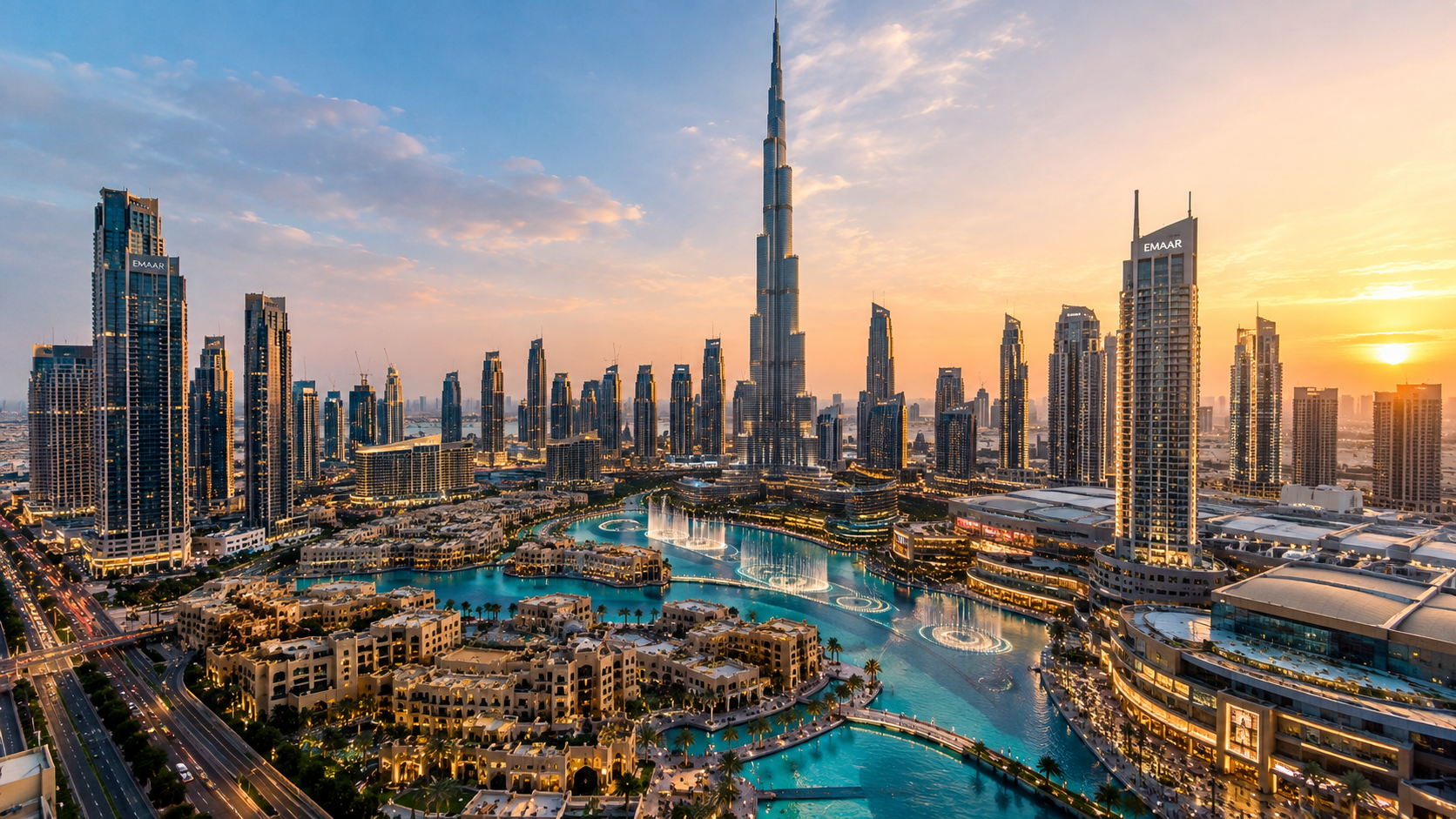
Emaar is preparing one of the largest master-planned developments in Dubai’s modern real estate history
Emaar Properties has announced plans for a new AED 200 billion master-planned urban development in Dubai, equivalent to approximately $55 billion, positioning the project among the most ambitious private-sector real estate developments currently taking shape in the city. The development is expected to exceed 4.5 million square metres of gross floor area and accommodate nearly 150,000 residents. Its planned mix includes residential towers, villas and mansions, Grade-A offices, retail, luxury hospitality and civic and cultural amenities. Emaar describes the concept as a self-sustaining urban district rather than a conventional property development.
The scale matters because it demonstrates that Dubai’s real estate story is increasingly moving from individual landmark buildings toward complete urban ecosystems. Emaar’s previous achievements include Downtown Dubai, Dubai Mall and Burj Khalifa, developments that helped establish the city’s international real estate identity. The new masterplan represents a different stage of the same strategy: creating an environment in which residential, commercial, hospitality and lifestyle components are integrated into a single destination.
At more than 4.5 million square metres, the project is effectively comparable to the creation of a substantial new city district. Its projected population of roughly 150,000 means that Emaar is not simply developing housing inventory. It is planning a community with its own economic and social infrastructure. That distinction has implications for investors because the underlying value proposition becomes dependent on the performance of the district as a whole. Residential values, office demand, retail footfall, hotel occupancy, transportation, public spaces and amenities can reinforce one another when the masterplan works as intended.
Emaar’s strategy also comes at an important moment for Dubai. The city has experienced extraordinary transaction activity and rapid development, but the market has simultaneously become more sophisticated. The next stage of growth is increasingly about quality, infrastructure, destination creation and international capital rather than simply increasing the number of units delivered. Emaar’s 2025 reporting illustrates the extraordinary scale of supply entering Dubai, with hundreds of projects launched and tens of thousands of units introduced across the market.

The company has also maintained a substantial revenue backlog. Reuters reported in September that Emaar’s backlog remained above $50 billion, while its chairman Mohamed Alabbar said the company was continuing to prepare the major development despite the difficult regional environment. Reuters also reported that Dubai completed significantly more real estate projects in the first half of 2026, with investment exceeding $30 billion.
For international capital, the deeper story is the continued emergence of Dubai as a platform for large-scale private urban development. A project of this magnitude requires land strategy, infrastructure coordination, financing, sales, hospitality partnerships, technology, retail planning and long-term asset management. It is closer to building an urban operating system than simply constructing buildings.
That is precisely why Emaar’s $55 billion project deserves attention from investors beyond the UAE. Large masterplans increasingly function as investment ecosystems. When a developer controls the residential, hospitality, retail and commercial architecture of a destination, it can influence the entire value chain around the asset. Dubai’s next real estate cycle may therefore be defined less by isolated towers and more by integrated districts capable of attracting capital, residents and global brands over decades.
The infrastructure supporting artificial intelligence is changing the geography of capital, land and real estate
One of the most important changes occurring across global real estate is happening outside the traditional definition of property. Artificial intelligence is creating enormous demand for data centres, computing infrastructure, power capacity, industrial sites and specialized facilities, turning technology investment into a direct driver of real estate markets. New U.S. economic data illustrates the scale of the shift: inflation-adjusted private residential fixed investment stood at approximately $748 billion in the second quarter of 2026, while investment in information-processing equipment reached approximately $752 billion. The latter category includes data-centre-related infrastructure and computer hardware and has risen sharply as AI investment accelerates.
The significance is not that computers have suddenly replaced real estate. Rather, the definition of strategically valuable real estate is expanding. A conventional office building is primarily an occupancy and location asset. A data centre, by contrast, sits at the intersection of land, electricity, fibre connectivity, cooling systems, security, industrial engineering and long-term technology demand. The physical property becomes part of a much larger digital infrastructure system.
The implications for investors are substantial. AI infrastructure requires locations where electricity can be secured, where transmission capacity is available, where fibre networks can connect facilities to other markets and where local governments are willing to accommodate significant industrial development. As a result, some locations previously considered secondary real estate markets can acquire strategic importance because they possess energy or connectivity advantages.
The capital intensity of the sector is equally significant. Fortune reported that capital expenditure by major technology companies including Alphabet, Amazon, Microsoft, Meta, Oracle and SpaceX was projected at approximately $870 billion for 2026, with estimates exceeding $1.3 trillion in 2027. Those numbers represent corporate technology spending rather than pure real estate investment, but a meaningful portion of the physical AI ecosystem requires land, buildings, power infrastructure and data-centre capacity.
This creates a new investment chain: AI demand → computing capacity → data centres → electricity → land → infrastructure → financing. Each link creates opportunities for different categories of capital. Real estate funds may finance facilities; infrastructure investors may finance power and transmission; developers may assemble land; utilities may expand capacity; technology companies may become long-term tenants or counterparties.
There is also an important risk dimension. The speed of AI capital expenditure creates uncertainty around future utilization. S&P Global has warned that capital expenditure by major hyperscalers is growing faster than revenue and that the rapid build-out could eventually create overcapacity if demand does not develop as projected. For real estate investors, this is a critical distinction: a data centre can be a highly strategic asset, but its long-term value depends on tenant credit, technological relevance, power economics and infrastructure quality.
The result is a new category of real estate intelligence. Investors can no longer analyze land solely through residential demand, commercial rents or tourism. In certain markets, the question may increasingly be whether a site can support the infrastructure required by the digital economy.
For Aurivance, this represents one of the most important intersections between technology and real estate. AI is not merely another tenant category. It is beginning to influence where capital goes, which land becomes valuable, which infrastructure receives financing and which cities can become future digital hubs. The real estate map of the next decade may therefore be shaped as much by electricity and computing capacity as by population growth and traditional property demand.
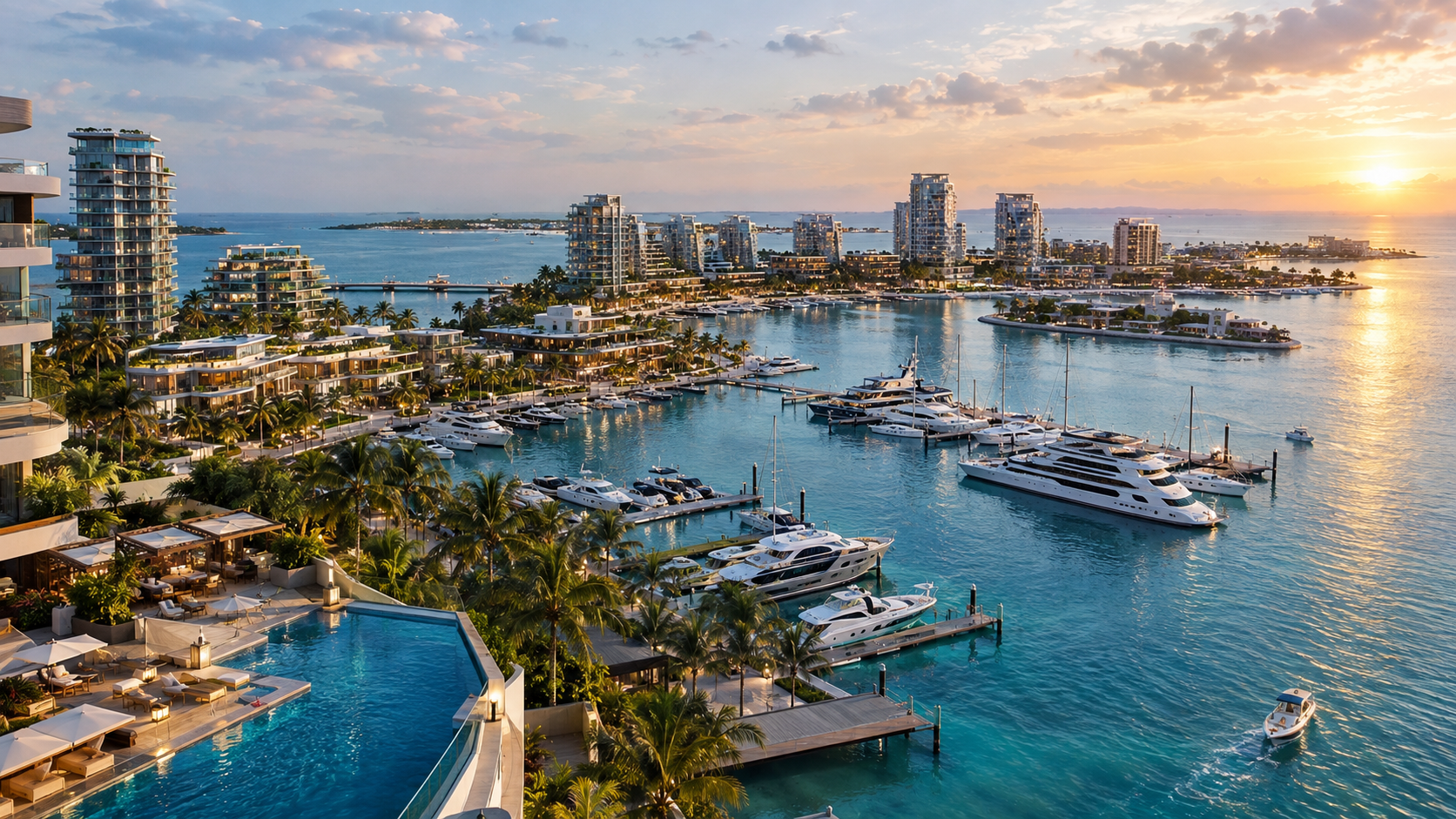
A $12 billion development vision is placing the Maldives at the centre of a new generation of large-scale island real estate
The Maldives has long been one of the world’s most recognizable luxury destinations, but the announcement of the Maldives Waterfront and Marina introduces a different proposition: the transformation of an island destination into a large-scale, integrated real estate, tourism, hospitality and maritime development platform. On September 21, 2026, the Government of Maldives and Abu Dhabi-based developer Eagle Hills signed a commercial terms agreement for the proposed Maldives Waterfront and Marina in the Ras Malé area. The overall development scale is envisioned at approximately $12 billion across multiple phases, making it one of the most ambitious real estate initiatives in the country’s history. The agreement establishes the principal commercial framework and shared vision, while detailed terms will continue to be developed as the project advances.
The significance of the proposal extends well beyond its headline valuation. The Maldives is a geographically constrained market in which land, connectivity, hospitality capacity and infrastructure are intrinsically connected. Unlike conventional metropolitan development, where new districts can expand across large contiguous areas, island development requires a much more sophisticated relationship between reclamation, maritime infrastructure, transportation, hospitality, residential supply, utilities and environmental considerations. A major waterfront and marina destination therefore represents not simply another luxury project, but an attempt to create a new economic node capable of attracting international capital, visitors, businesses and high-net-worth residents.
Eagle Hills, founded and chaired by Mohamed Alabbar, has increasingly positioned itself as an international developer of large-scale waterfront and destination-led projects. The Maldives initiative fits that broader model. Rather than concentrating exclusively on individual towers or standalone hotels, the concept revolves around an integrated destination in which residential real estate, hospitality, retail, leisure and marine infrastructure reinforce one another. For investors, that distinction is critical. A destination can potentially create multiple revenue streams and different classes of real estate value, allowing residential sales, hotel operations, marina activity, commercial uses and tourism expenditure to participate in the same economic ecosystem.
The proposed scale also illustrates how luxury real estate is changing in certain global destinations. The most valuable projects increasingly sell an entire environment rather than simply square metres. Waterfront access, branded hospitality, private residences, marina infrastructure, restaurants, retail, entertainment and curated experiences become components of a single investment proposition. In markets where land is inherently scarce, the ability to create a complete destination can become as important as the individual architecture of the buildings themselves.
According to Eagle Hills, the project is expected to have a substantial long-term economic impact, while The National reported company estimates suggesting the destination could attract more than one million visitors annually at maturity and potentially generate significant foreign investment over its lifetime. These figures should be treated as projections rather than completed outcomes. The commercial terms agreement is an important development milestone, but the ultimate investment schedule, financing structure, construction phases and realized economic impact remain dependent on subsequent agreements and execution.
For global investors, the Maldives story therefore deserves to be viewed through a wider lens. The opportunity is not merely the construction of luxury properties in an already famous destination. It is the creation of infrastructure capable of supporting a larger and more diversified premium economy. The central question will be whether the project can successfully convert the Maldives’ extraordinary natural scarcity and global brand into a durable, infrastructure-backed real estate ecosystem.
If successful, Maldives Waterfront and Marina could become an important case study in destination development: how a geographically constrained luxury market can attract billions of dollars by combining hospitality, residential real estate, marine infrastructure and international capital into a single long-term platform. For Aurivance, that makes the project relevant not simply as a luxury property story, but as a story about how global capital is redesigning the economics of island destinations.

Donald Bren and Wang Jianlin are among the world’s most prominent real estate tycoons, each leveraging unique strategies to amass significant wealth through innovative real estate projects. Below, we explore how they built their fortunes, the estimated size of their wealth, their specific sectors within real estate, and how they incorporate innovation, with a nod to the potential of technologies like home automation.
Donald Bren (Irvine Company)
How He Built His Fortune
Donald Bren, born in 1932 in California, is the chairman and sole owner of the Irvine Company, a leading U.S. real estate firm. Starting in 1958, Bren founded the Bren Company, focusing on homebuilding. In 1977, he joined a group of investors to acquire the Irvine Company, which owned vast tracts of land in Orange County, California. Over time, Bren bought out his partners, becoming the sole owner by the 1980s. His strategy centered on large-scale, master-planned urban development, transforming Irvine Ranch—spanning one-fifth of Orange County—into a model community with residences, offices, shopping centers, and recreational spaces. His meticulous urban planning and long-term vision have driven sustained property value growth.
Estimated Fortune
As of 2023, Forbes estimates Donald Bren’s net worth at approximately $17 billion, making him the wealthiest real estate magnate in the United States and one of the richest globally. His wealth primarily stems from the Irvine Company’s assets, including over 115 million square feet of properties, such as 500 office buildings, 40 shopping centers, and 60,000 residences.
Real Estate Sector
Bren specializes in mixed-use real estate development and large-scale urban planning. The Irvine Company develops and manages:
-
Residential properties: Apartments and homes in master-planned communities.
-
Commercial properties: Iconic shopping centers like Irvine Spectrum Center and Fashion Island in Newport Beach.
-
Office spaces: Over 40 million square feet of office properties.
-
Urban infrastructure: Irvine Ranch exemplifies integrated community planning, combining housing, retail, schools, and recreational areas.
Innovation and Technology
While not focused on home automation, Bren’s innovation lies in sustainable urban planning and high-quality community design. The Irvine Company employs advanced resource management technologies, such as efficient irrigation systems and energy-saving building designs. Bren has also pursued strategic partnerships, notably attempting to attract Amazon’s operations to Irvine, showcasing his vision to integrate technology-driven companies into his developments. His emphasis on sustainability and design sets a benchmark for urban development.
Wang Jianlin (Wanda Group)
How He Built His Fortune
Wang Jianlin, born in 1954 in China, founded Dalian Wanda Group in 1988, starting as a residential real estate developer. After 17 years in the Chinese military and a stint as a local administrator, Wang launched Wanda with a modest loan of €80,000. In 1992, Wanda became one of the first shareholder companies in communist China, fueling rapid growth. Wang shifted focus to commercial real estate, developing shopping plazas and hotels. By the 2000s, Wanda was opening about 20 malls annually. He diversified into entertainment (acquiring AMC Theatres and Legendary Entertainment), sports (owning 20% of Atlético de Madrid until 2018), and tourism, but commercial real estate remains the cornerstone of his wealth. His business model emphasizes innovative consumer experiences and integrated services.
Estimated Fortune
Wang Jianlin’s wealth peaked at $40 billion in 2015, making him China’s richest man at the time, according to Forbes. However, due to China’s real estate market volatility and government restrictions, his fortune declined. As of 2023, Forbes estimates his net worth at $8.2 billion, ranking him 249th globally and 39th in China. Despite challenges, he remains a key player in the industry.
Real Estate Sector
Wang specializes in commercial real estate and entertainment-driven developments. Wanda Group operates:
-
Shopping malls: Over 125 Wanda Plazas across China, integrating retail, cinemas, hotels, and offices.
-
Luxury hotels: More than 100 five-star hotels.
-
Investment properties: Over 21 million square meters of commercial real estate.
-
Cultural and tourism projects: Developments like Wanda City theme parks and entertainment complexes.
Innovation and Technology
Wang Jianlin emphasizes business model innovation and technology integration. Key examples include:
-
Wanda Plazas: These complexes use smart building management systems and digital platforms to enhance the consumer experience.
-
Entertainment integration: Acquisitions like AMC Theatres and Legendary Entertainment reflect his strategy to merge real estate with immersive entertainment technologies.
-
Sustainability efforts: Wanda has invested in eco-friendly projects, such as smart city developments, though with mixed success due to China’s real estate crisis.
-
Philosophy of innovation: In his book The Wanda Way, Wang argues that innovation can transform any industry, citing Starbucks’ success in design and service as inspiration for his malls.
Comparison and the Potential of Technology in Real Estate
-
Complementary Approaches: Bren focuses on sustainable, master-planned communities in the stable U.S. market, while Wang targets commercial and entertainment complexes in China’s dynamic but volatile market. Both demonstrate that strategic vision and diversification are critical for real estate success.
-
Technology Integration: Neither specializes in home automation, but both leverage technology to enhance functionality and appeal. Bren uses resource management systems, while Wang incorporates digital consumer experiences and smart building technologies.
-
Potential of Home Automation: Home automation could enhance their models. The Irvine Company could integrate smart home systems into its residences, while Wanda could deploy automation in hotels and malls for personalized lighting or climate control, aligning with consumer demand for efficiency and customization.
-
Impact of Innovation: Their success underscores the potential of combining real estate with innovation, whether through urban design, entertainment, or technology. Home automation represents a promising frontier, particularly in markets valuing smart, efficient living.
Sources
-
Forbes Billionaires List (2023). Real-Time Billionaires Rankings. Available at: https://www.forbes.com/billionaires/.
-
Irvine Company. Official Website. Available at: https://www.irvinecompany.com/.
-
Forbes (2017). Donald Bren: The Billionaire Behind Irvine’s Master-Planned Community. Available at: https://www.forbes.com/sites/chloesorvino/2017/03/20/donald-bren-irvine-company-billionaires/.
-
Forbes (2023). Wang Jianlin Profile. Available at: https://www.forbes.com/profile/wang-jianlin/.
-
South China Morning Post (2018). How Wang Jianlin Turned a Small Loan into a Real Estate Empire. Available at: https://www.scmp.com/business/companies/article/2165248/how-wang-jianlin-turned-small-loan-real-estate-empire.
-
Wang Jianlin (2016). The Wanda Way: The Managerial Philosophy and Values of One of China’s Largest Companies. LID Publishing.


Saudi Arabia Opens a New Chapter for International Property Capital

Tokenized Real Estate Moves Toward Institutional Infrastructure

Germany’s syte Raises €9 Million to Bring AI Into Real Estate Planning

Maldives: Eagle Hills Advances a $12 Billion Waterfront and Marina Vision

Dubai: Emaar’s $55 Billion Urban Bet
